 Kuulo
KuuloA construction company turns every project into the next project's head start
A structure-led construction system connects local requirements, project knowledge, people, delays and costs so the next team starts with evidence.
Project outcome
Recovered revenue was at least equivalent to 10% of annualised revenue projection after implementation, subject to measurement sign-off.
Annual engagement value
Approximately 500k per year, currency to confirm
First working milestone
To confirm
Status
Ongoing construction operations and knowledge system
Reach
Project management, site, compliance, HR and finance workflows
Revenue outcome
At least equivalent to 10% of annualised revenue projection after implementation
Every construction project contains knowledge the next project should be able to use.
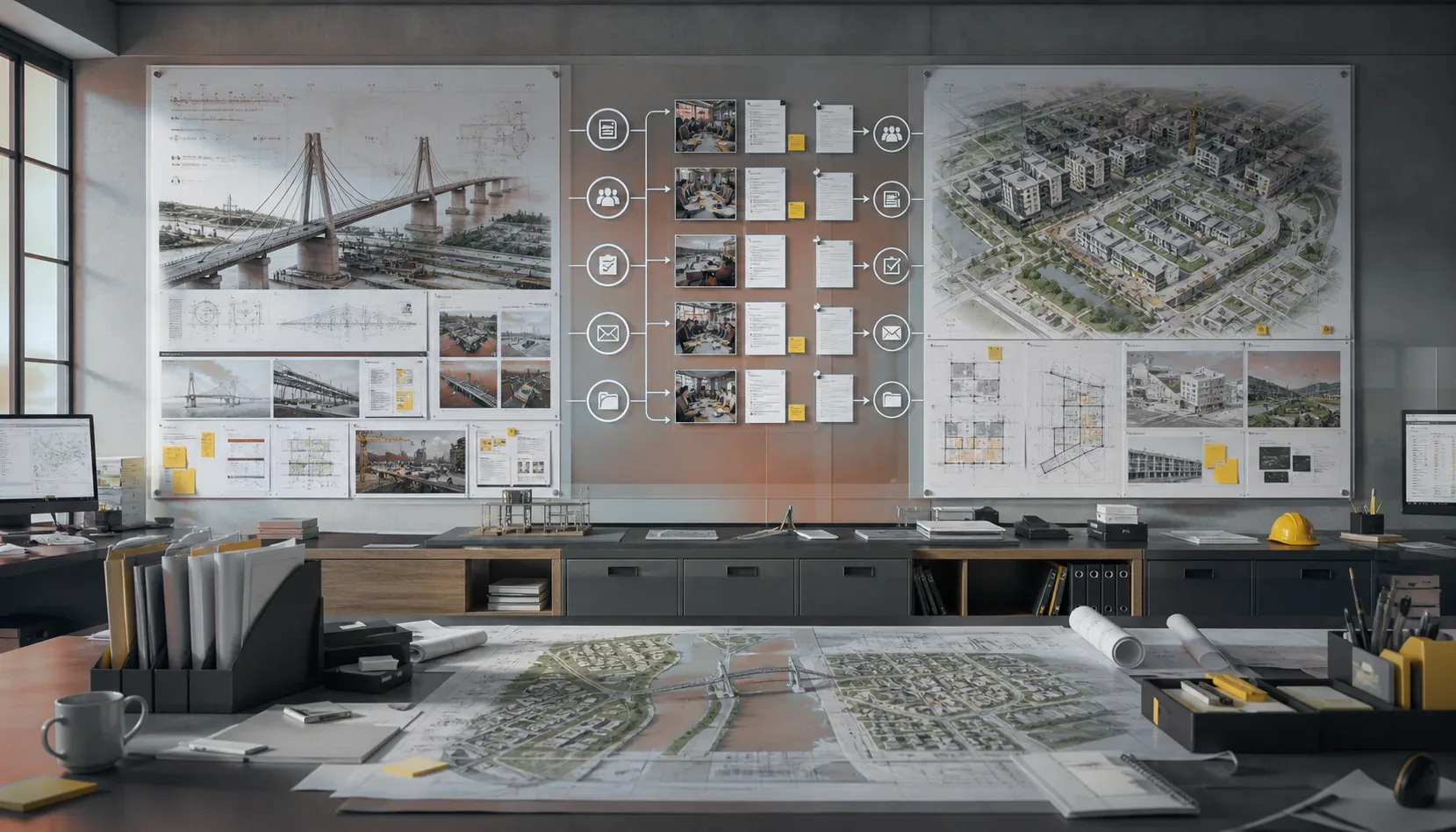
This project created a structure-led operations and knowledge system for a large construction company delivering public bridge contracts, housing developments and other multi-site work. Project email, local requirements, people, decisions, delays, costs and source documents stay connected so the company can reuse expertise and control revenue leakage.
Project brief
A bridge contract and a housing development can share a contractor and still carry different local requirements, permits, contract obligations, work packages and commercial exposure. The company needed to transfer knowledge between projects without asking teams to remember where it lived.
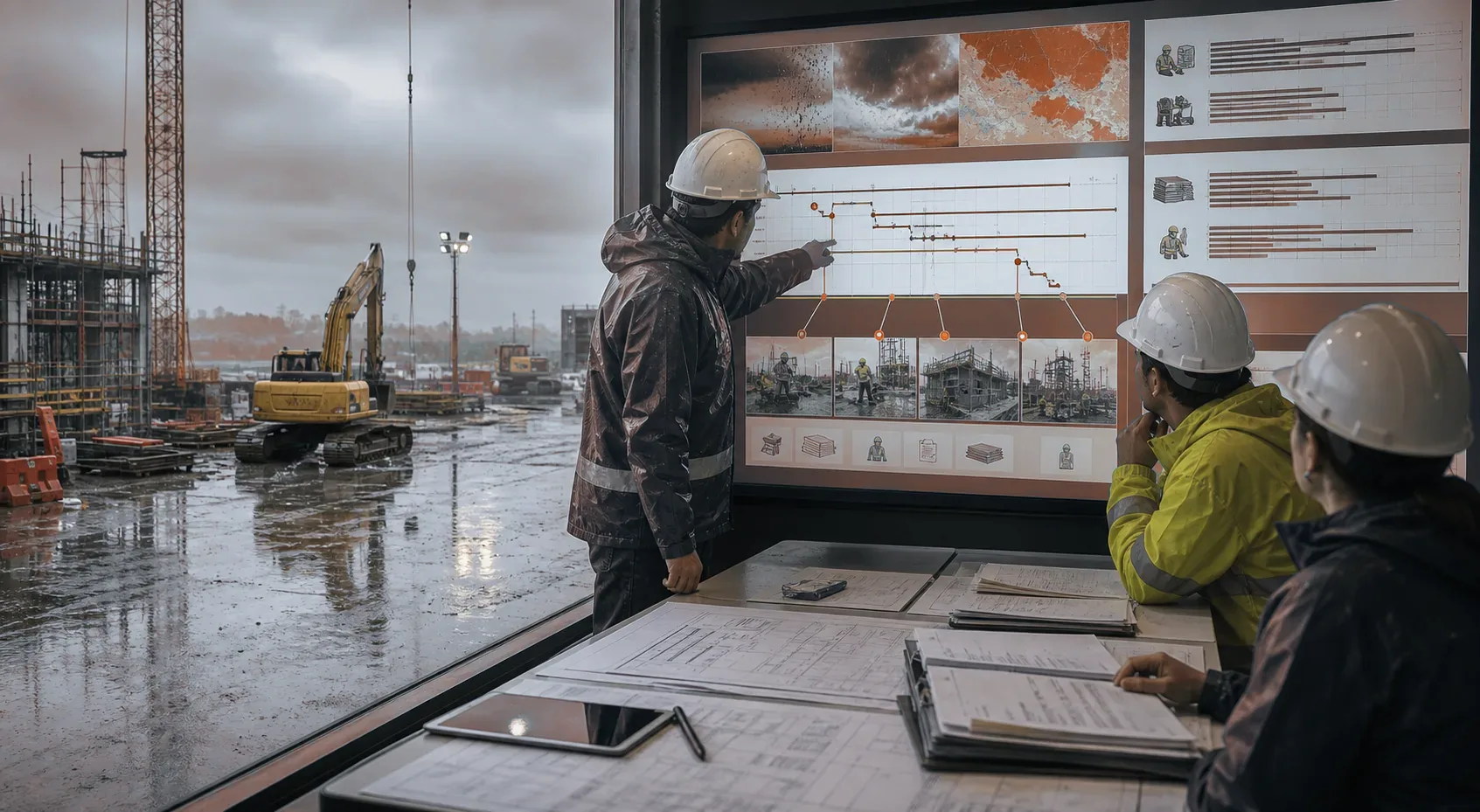
Weather created a direct commercial problem. Rain can move the programme while equipment rental and paid labour continue. The team needed to connect the event to affected work, dependencies and charges so a late status did not become an unexplained revenue gap.
What we delivered
- Project-aware email and correspondence search.
- A knowledge workspace for requirements, policies, permits, decisions and project documents.
- Retrieval-augmented generation (RAG) that retrieves relevant source documents before answering.
- A company-wide structure connecting people, roles, projects, work packages, decisions and evidence.
- A project timeline for milestones, dependencies, delays and reasons.
- Weather and disruption records connected to rental, labour and other cost exposure.
- Project cost and change tracking, including the reason for extra charges.
- Permissions and evidence trails for sensitive project and personnel information.
What changed
Project teams can see which correspondence belongs to which job, who owns the next action and what needs chasing. A new team can ask what was done in City A, Project X and use the relevant source-backed knowledge as a starting point for City A, Project Y.
The company can also find the people connected to a relevant project or work package. Knowledge transfer reaches HR, compliance and delivery instead of staying with the person who happens to remember the answer.
The timeline and cost view connect weather and other disruptions to schedule impact, rental, labour exposure and extra charges. The record supports factual discussions about extensions, variations and budget responsibility where the contract permits it. It does not decide liability or guarantee recovery.
After implementation, recovered revenue was at least equivalent to 10% of annualised revenue projection. The denominator, measurement period and attribution require approval before publication.
Engineering detail
RAG searches relevant source documents before producing an answer. The source project, document, date and context remain visible, so earlier experience is not mistaken for current approval. A qualified professional still checks the current local requirement, contract and site condition.
The structure is deliberately company-wide but not an unrestricted folder. Project, municipality, contract, work package, person, date, decision and source relationships make experience reusable while permissions govern sensitive information.

The project in one sentence
A construction company connected project knowledge and commercial events so the next team could start with relevant evidence and recover revenue lost through duplicated work, delays and missed charges.