 Kuulo
KuuloAn existing video workflow became a managed interpretation service
A real-time bridge added central device, account, permission, call logging and billing control around an existing healthcare video workflow.
Project outcome
One portal governs devices across sites and states against the strict no-downtime standard required for patient-facing interpretation.
Investment
$100k
First working milestone
4 weeks
Full milestone set
3 months
Status
Live and still operated by us
Reach
More than 50 languages and hundreds of interpreted calls a day
The video call is only one part of a reliable interpretation service.
This project added the operational layer around an existing video workflow for a US healthcare interpretation provider. One portal governs devices, accounts, permissions and device states, while call records connect delivery to invoicing. Professional human interpreters remain central to the service.
Project brief
The provider supports more than fifty languages and hundreds of interpreted calls a day across hospital environments. The video workflow could carry the conversation. It did not provide the central control needed to manage the service around the conversation.
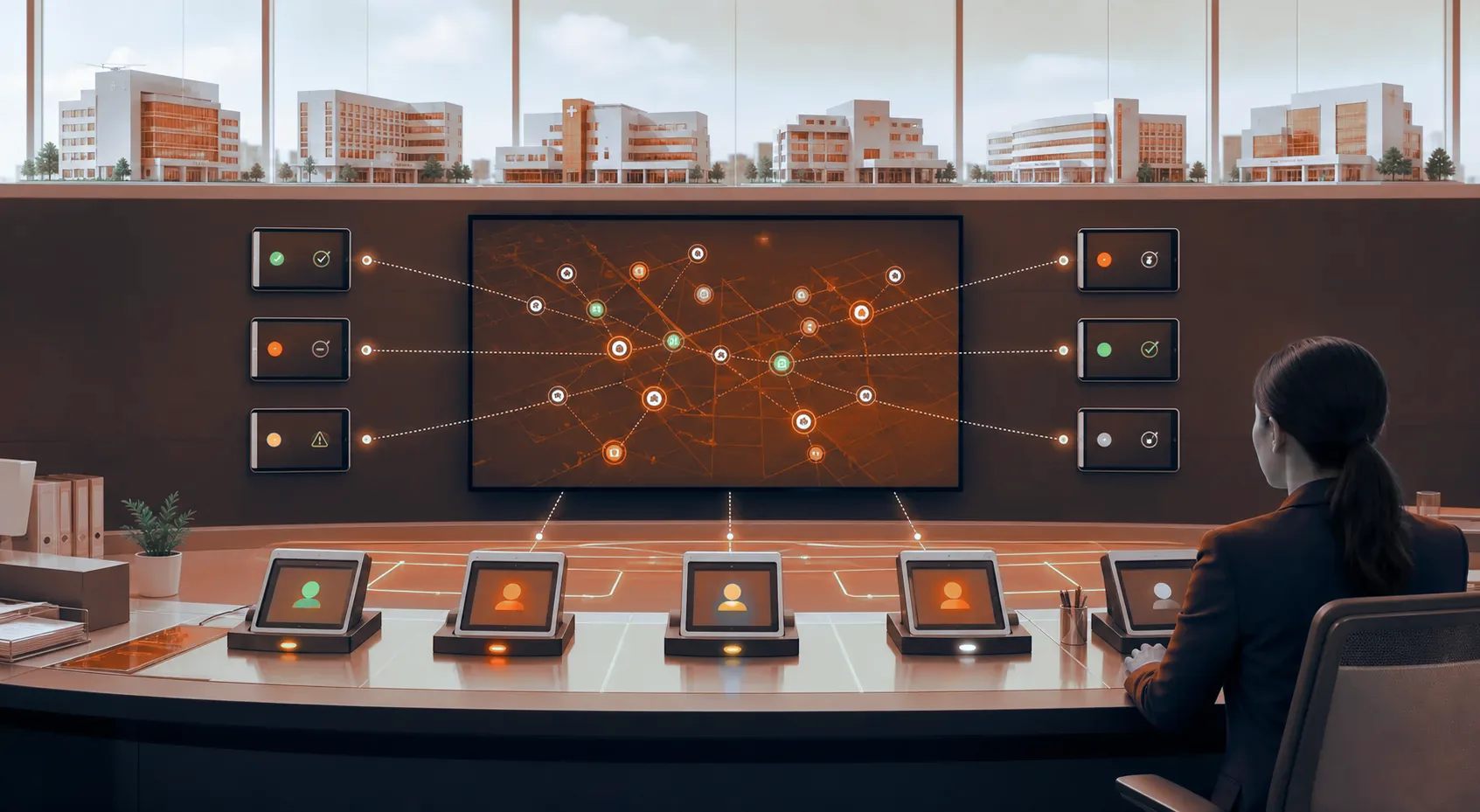
Administrators needed to know which account could join, which device was trusted, what state a tablet was in and what happened on the call. The service also had a strict no-downtime requirement because a failed interpretation call can prevent a patient from being understood.
What we delivered
- Interpreter clients for iPad, Android and desktop.
- A bridge into the existing live video workflow.
- One administration portal for accounts, devices, permissions and states.
- Fine-grained access controls.
- Secure device management across a distributed operation.
- Call logging connected to invoicing.
- An operating model built around the strict no-downtime requirement.
What changed
Administrators can manage the service as one operation instead of treating each device or hospital environment as a separate support problem. Different tablet states remain possible, but they are visible and governable from one place.
The person responsible for service delivery can understand the account and endpoint behind a call. The call record can then support operational follow-up and invoicing. That closes the gap between a conversation taking place and the organisation being able to control and account for it.
The first working build arrived in four weeks, and all defined milestones were complete in three months. The live service supports more than fifty languages and hundreds of interpreted calls a day.
Engineering detail
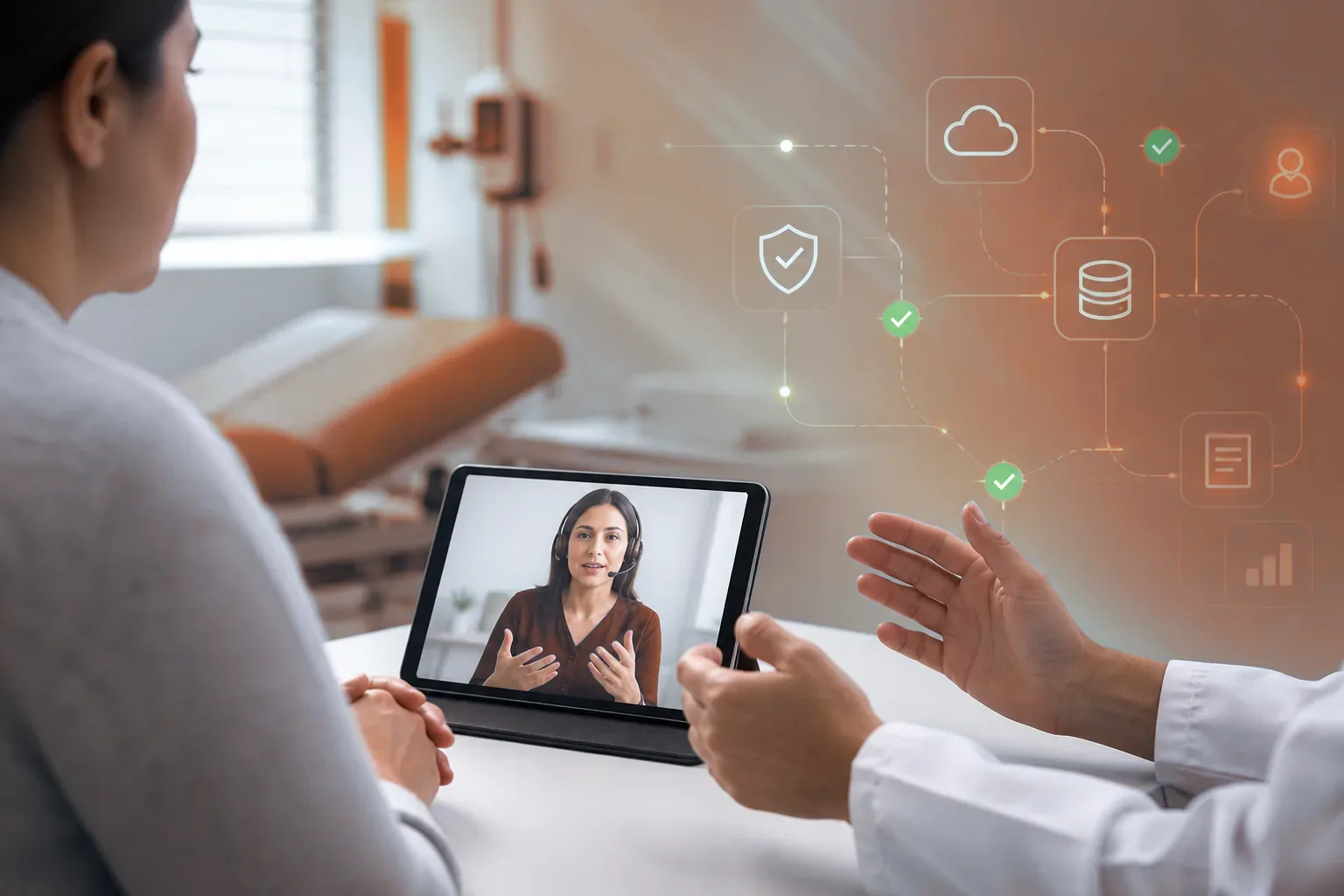
The real-time bridge connects the interpreter's device to the live call while keeping identity, account, permission and device context around it. It runs across iPad, Android and desktop so the service does not depend on one hardware choice.
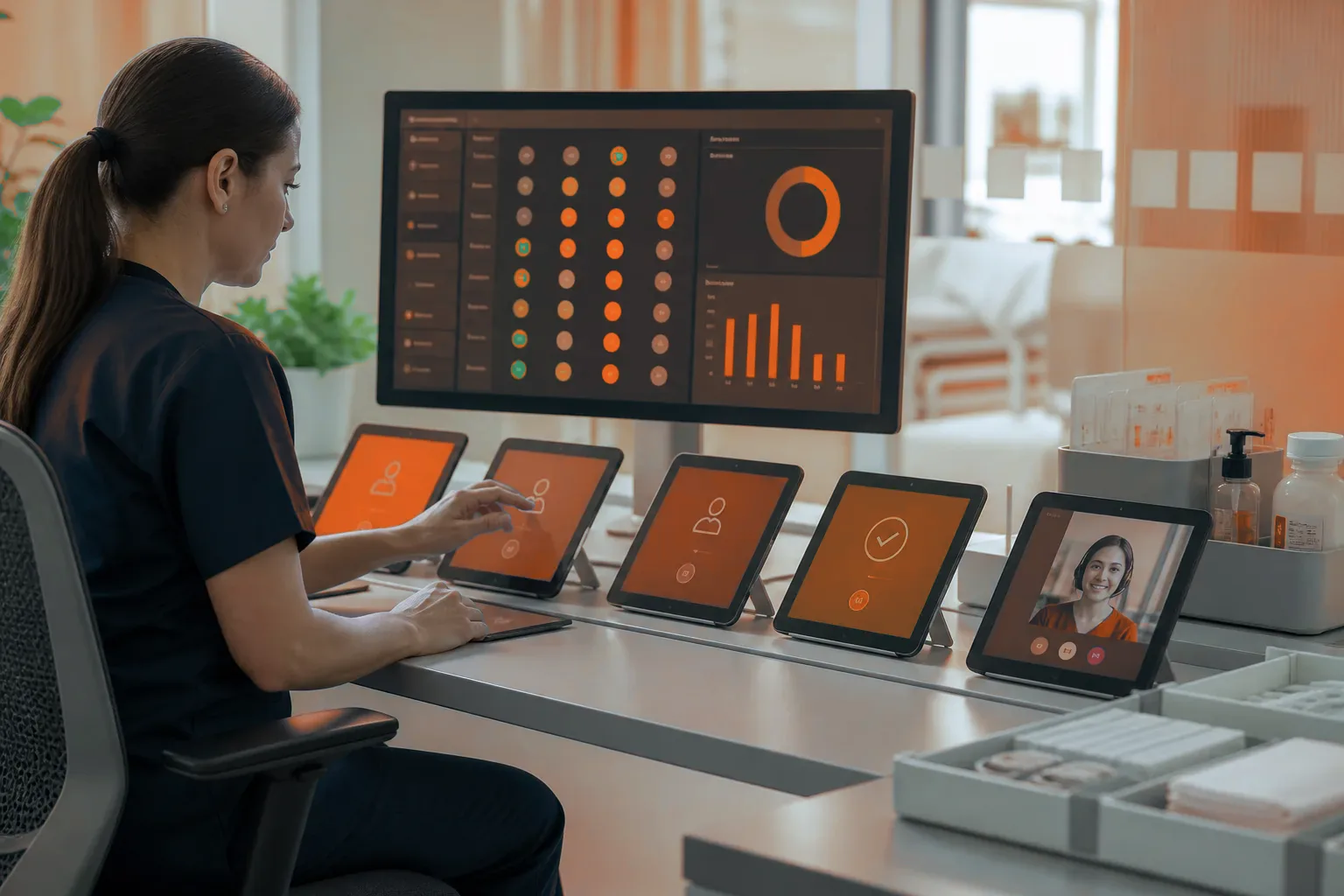
The administration portal treats device state as part of service governance. A tablet can be ready, assigned to a context or awaiting an administrative change. The central team can see that state and manage it without requiring local staff to remember the configuration.
Call logging keeps the interaction connected to the operational and commercial workflow. Finance can use the record as the starting point for invoicing control, while service operations can use it for follow-up. The system does not replace the provider's existing video workflow or its human interpreters.
The project in one sentence
An existing video workflow became a governed healthcare interpretation service with central device control, call records, invoicing support and a strict no-downtime operating requirement.