 Kuulo
KuuloAccountants cut 80% of manual client-work handling with a CRM-first workflow
A CRM connected the client mailbox to the accounting platform, reducing records chasing and preparation work while keeping accountant review in control.
Value delivered
Manual client-work handling was reduced by 80% in a workflow where about 99% of supporting evidence arrived through the client mailbox, subject to measurement sign-off.
Accountants do not lose time because a client has too few records. They lose it because the records arrive in the wrong place, in the wrong thread or without the context needed to use them.
In this workflow, about 99% of the supporting evidence arrived through the client's mailbox. The accounting work still had to happen in the accounting platform, but client requests, attachments, follow-up questions and missing records sat around it in email. The result was repeated chasing, manual sorting and rekeying before the accountant could begin the review.
We built a CRM-first workflow that connects the client mailbox to the accounting platform. The CRM becomes the front door for client communication and records collection, while the accounting platform remains the system for accounting work. The result was an 80% reduction in manual client-work handling, with automation preparing the next action under human oversight.

Client background
Our client is an accounting business that needs to turn client correspondence and supporting records into accurate, reviewable accounting work. Its clients send information by email because that is the channel they already use. The practice cannot ask every client to learn another portal before it can complete a routine request.
The accounting platform remains essential. It holds the ledgers, transactions and formal accounting workflow. The missing capability was the operational layer around it: a reliable way to receive client evidence, understand what is missing and move the right information into the right piece of work.
Business challenge
The manual work appeared in the space between a client message and a complete client file:
- a client sent a bank statement, invoice, receipt or payroll document to an individual mailbox;
- the practice had to identify which client and period it belonged to;
- a team member checked whether the document was already available or still missing;
- questions went back and forth by email;
- files were downloaded, renamed and associated with the correct accounting work;
- and an accountant checked the evidence again before posting, reconciling or preparing the work.
The accounting terms are familiar. The cost is client-file administration, records chasing, document sorting and repeated status checking. It reduces the time available for review and advisory work, and it creates a poor experience for clients who have already sent the information but are asked for it again.
The practice needed to reduce that handling without asking clients to adopt another disconnected tool. Automation also had to remain under accountant oversight. A system can identify a likely missing record or prepare a request. It must not silently post an entry, close a query or treat an uncertain attachment as approved evidence.

Implementation
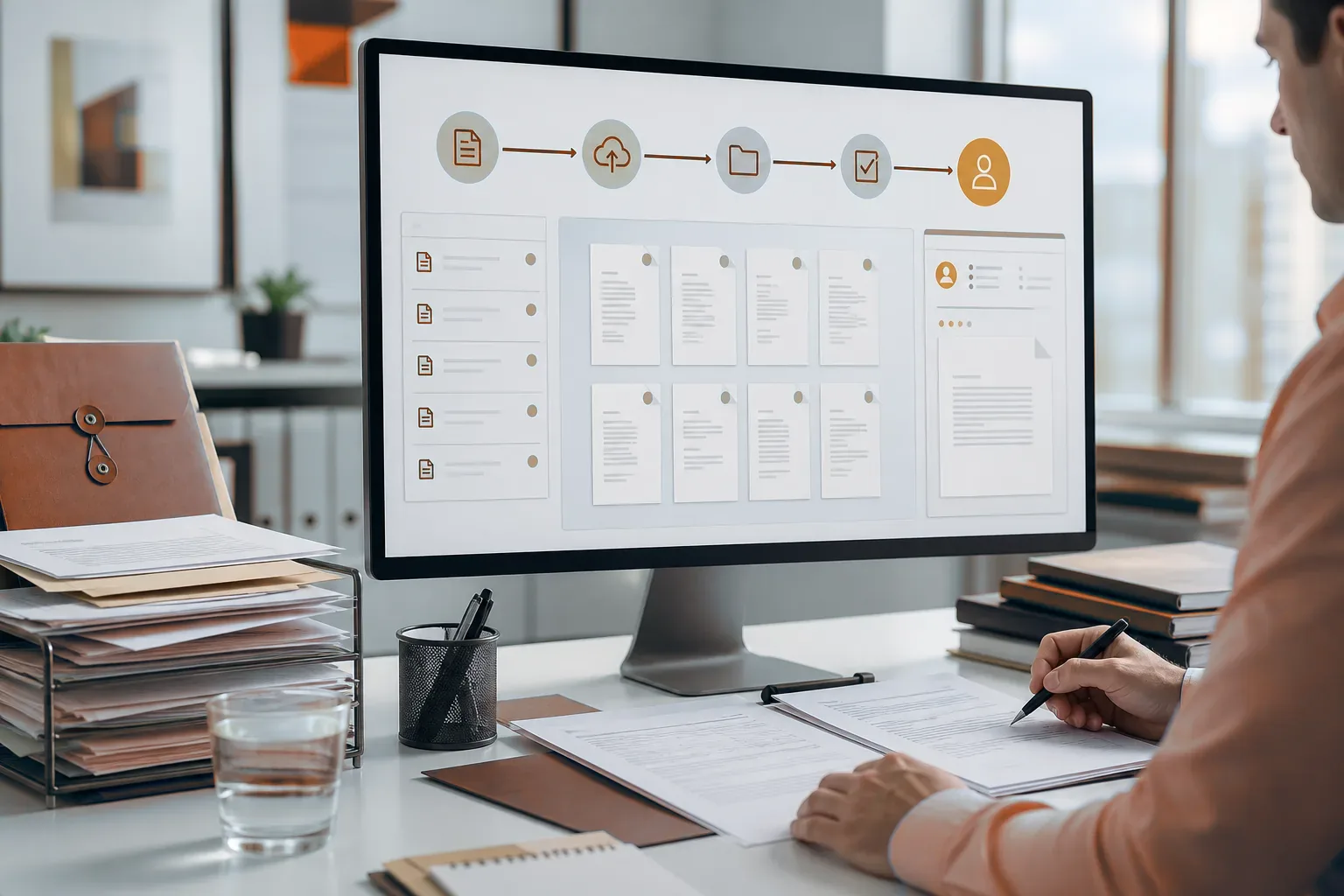
We made the CRM the first structured destination for client communication and evidence requests. The client mailbox connects to the CRM, so incoming messages and attachments can be associated with the right client, accounting period, work type and open request.
The CRM then connects that operational context to the accounting platform. The accounting platform continues to hold the accounting records. The CRM holds the client-facing workflow that helps the practice get the right information to the right place without asking the team to search email every time.
The workflow can sort incoming records, identify what a request relates to, flag missing evidence, prepare a follow-up and move a complete item into the accountant's review queue. A clear status tells the team whether a client request is waiting, a document needs checking or the work is ready for the next accounting step.
The automation is deliberately supervised. The accountant can inspect the client, period, document, request and proposed action before anything consequential happens. Where the evidence is ambiguous, the workflow surfaces the uncertainty instead of hiding it behind a confident classification.
The CRM-first approach also avoids new-tool fatigue. Clients keep using the mailbox they already understand. The practice gets one structured place to manage the correspondence, while the accounting platform remains part of the workflow instead of being replaced by another general-purpose system.
Why it was difficult
Accounting evidence has context. A receipt can belong to a different entity, period or treatment from the one suggested by its filename. A bank statement can be incomplete. A client may answer one part of a request while leaving another missing. The system had to organise the work without confusing likely relevance with accounting approval.
The integration also had to respect the boundary between client communication and accounting records. The CRM can prepare, route and track the work. The accountant remains responsible for review, reconciliation, posting and the final client file.
Value delivered
- About 99% of the supporting evidence in this workflow arrived through the client mailbox.
- The CRM connects client communication and evidence requests to the accounting platform.
- Manual client-work handling was reduced by 80%, subject to the approved measurement basis.
- Accountants spend less time chasing, sorting, re-requesting and checking the status of records.
- The practice can see what is missing, what is ready for review and what needs a client response.
- Clients can continue using the mailbox they already know instead of adopting another disconnected tool.
- Automation prepares work under human oversight and does not silently approve accounting treatment.
The commercial value is capacity returned to the practice. Accountants can spend more time reviewing the numbers and advising the client, while the CRM handles the repetitive coordination around getting the evidence ready.
What this means for your business
If your accounting team spends the first part of every job finding records in email, the answer may not be another document portal. Start with the channel clients already use, connect it to the system where the work is completed and keep review with the professional responsible for the result.
The same pattern applies to tax practices, auditors, payroll providers, wealth managers and insurance brokers. The useful automation is the one that removes client-file administration without creating a new tool that clients and staff have to maintain.
Related: CRM engineering · Workflow automation · Accountancy practices