 Kuulo
KuuloAdmins configure tablets across states without site-by-site firefighting
A structured device-management portal made different tablet configurations and states manageable across a distributed US operation.
Value delivered
Central administrators can manage tablet configuration, account context and device state across different US states.
Administrators should not have to fight every tablet one location at a time.
The interpretation provider operated a distributed service with tablets in different states across the United States. Each device could need a different configuration, account or permission. Without one operational view, the central team had to rely on local knowledge and manual checks to understand what was ready for the next patient interaction.
We made those variations manageable through one administration portal. The team can govern the configuration and state of tablets across the operation, while the device remains associated with the account and service context it needs. Site-by-site variation becomes structured administration instead of firefighting.
Client background
Our client is a US healthcare interpretation provider supporting hospital operations, more than fifty languages and hundreds of interpreted calls a day. The service depends on a combination of professional interpreters, a live video workflow and the tablets or computers used at the point of care.
The local device is visible to the person using it. The provider's operational team needs a different view: how the estate is configured, which state each device is in, and whether a change can be made centrally without waiting for a local intervention.
Business challenge
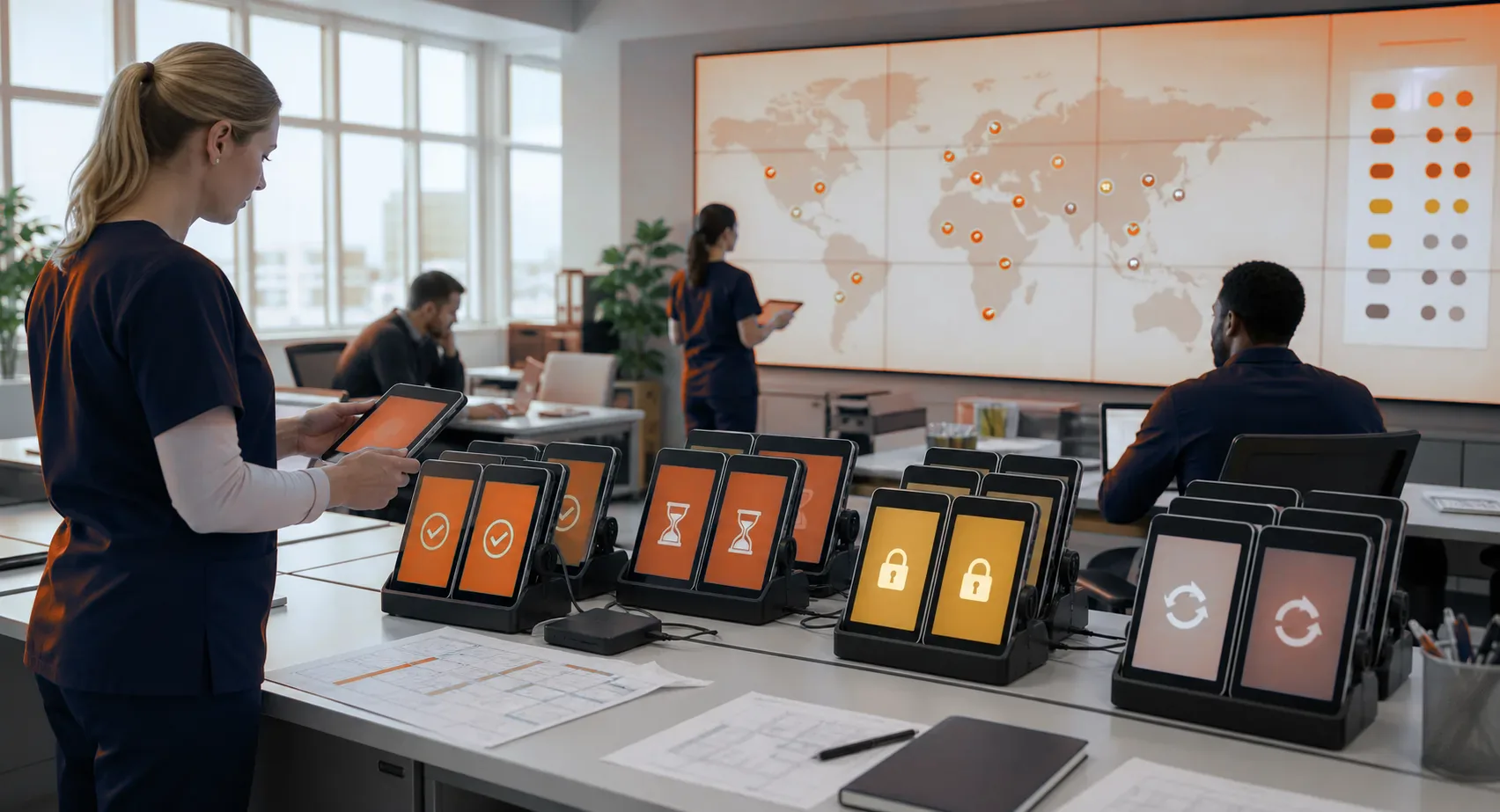
Distributed operations become fragile when location is the organising principle. A central administrator may know that a tablet needs a change, but not know which local person has access, what state the device is currently in or whether the change will affect an upcoming call.
The old pattern creates a chain of avoidable questions:
- Which device is being referred to?
- Which account is signed in or permitted to use it?
- Is it configured for the correct service state?
- Does the local team need to be contacted?
- Has the change actually been made and recorded?
Those questions matter more in healthcare than in an ordinary device fleet. A failed interpretation connection can prevent a patient and care professional from understanding one another. The provider needed a central way to manage variation while retaining the safeguards of a live service.
Implementation
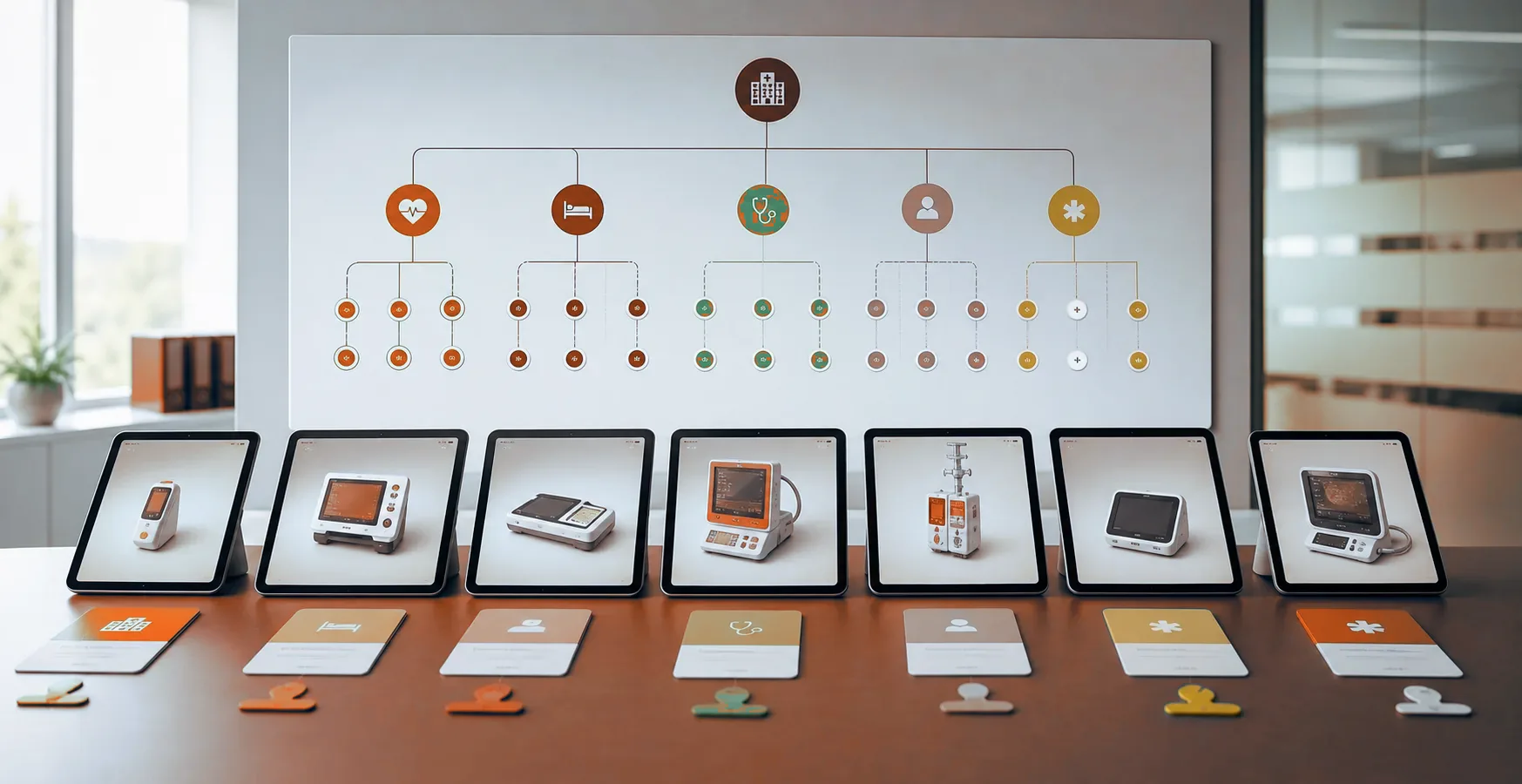
We built a portal that brings device identity, account context, permissions and state into one administrative workflow. A central operator can find the relevant tablet, understand the configuration that applies to it and make an approved change without treating the whole service as one identical device profile.
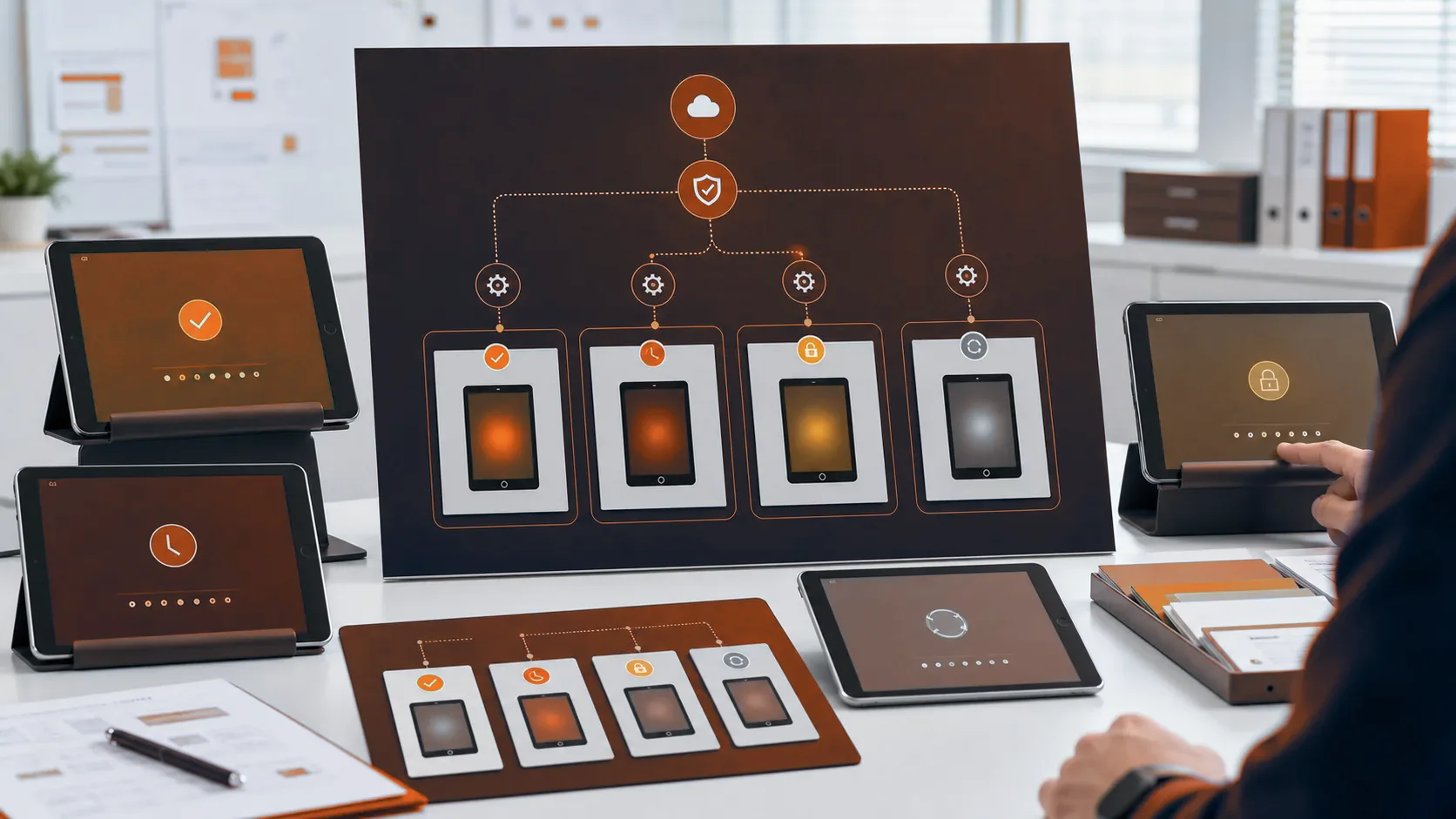
The state model makes local variation explicit. Different tablets can be in different operational states, and the portal gives the administration team a place to manage that fact. The system is not pretending that every device should be configured identically. It is making the differences visible, governed and easier to operate.
The portal sits around the existing video interpretation workflow rather than replacing it. This kept the provider's service familiar to its users while giving the central team the missing control over the devices and accounts that support it.
The service supports more than fifty languages and hundreds of interpreted calls a day. The portal's purpose is to make the operation behind those calls manageable, especially when devices are spread across states and local teams.
Why it was difficult
The hard part was not displaying a list of tablets. It was representing enough context to make a central decision safely. Device identity, user access and operational state have to stay connected. A change that looks harmless in a generic inventory can be wrong for the account or call context attached to that device.
The service also has a strict no-downtime requirement. That is a human safety constraint, not only an IT preference. Administration must improve control without introducing uncertainty into the live interpretation path.
Value delivered
- Central administrators can manage tablet configuration across different US states.
- Device, account, permission and state information is connected in one portal.
- Local variation is visible instead of being hidden in site-by-site workarounds.
- Approved administrative changes do not depend on finding the one person who remembers a device.
- The existing interpretation workflow remains part of the service.
- The operation remains usable across more than fifty languages and hundreds of calls a day.
- The administration model supports the strict no-downtime standard required for patient-facing interpretation.
The commercial value is less time spent coordinating device changes and less uncertainty about whether the next endpoint is ready. The provider can run a distributed service with a central view of the conditions that keep it working.
What this means for your business
If you operate across states, branches or sites, local variation is unavoidable. The costly part is having no shared way to govern it. A structured administration portal can give central teams control without pretending that every endpoint has the same job.
That applies to healthcare devices, field service equipment, branch operations, managed access and any customer-facing service where the local endpoint must remain ready while the central team remains accountable.
Related: Platform engineering · Workflow automation · Property management