 Kuulo
KuuloClinical write-ups drop from two hours to fifteen minutes
A bounded report-generation workflow gave more than fifty clinicians a structured draft in about fifteen minutes instead of roughly two hours.
Value delivered
The report-generation component reduced a clinical write-up from about two hours to about fifteen minutes for more than fifty clinicians.
Clinical documentation was taking about two hours after the work was already done.
For the clinicians using this digital health platform, the visit or session was only the first part of the job. The professional still had to reconstruct what happened, organise the information and write the formal report. That delayed the next task and turned documentation into a second shift at the end of the day.
We added a bounded AI-assisted report-generation workflow. It produced a usable draft in about fifteen minutes instead of roughly two hours for more than fifty clinicians. The professional still reviews and signs the final report. The value is the time returned to the clinician without removing the judgement that makes the document safe to use.
Client background
Our client is a digital health company operating a patient and clinician platform across NHS care systems. Clinicians use the service to work with patients, review information and document what they have done.
The platform's report workflow had to fit into real clinical work. A report could not be treated as a generic generated document. It needed the right patient and session context, a structure the professional recognised and a clear point at which a qualified person could correct and approve it.
Business challenge
The documentation task began after the clinical work, when the professional had already moved on to the next patient or visit. Writing the report took about two hours. That time was expensive in three ways:
- it reduced the time available for direct patient work;
- it pushed documentation into evenings or later administrative blocks;
- and it created a gap between the event and the finished record.
The platform needed to reduce the mechanical work without pretending that a generated draft was a clinical decision. The system had to help with structure and recall, while leaving interpretation, correction and sign-off with the professional.
Implementation
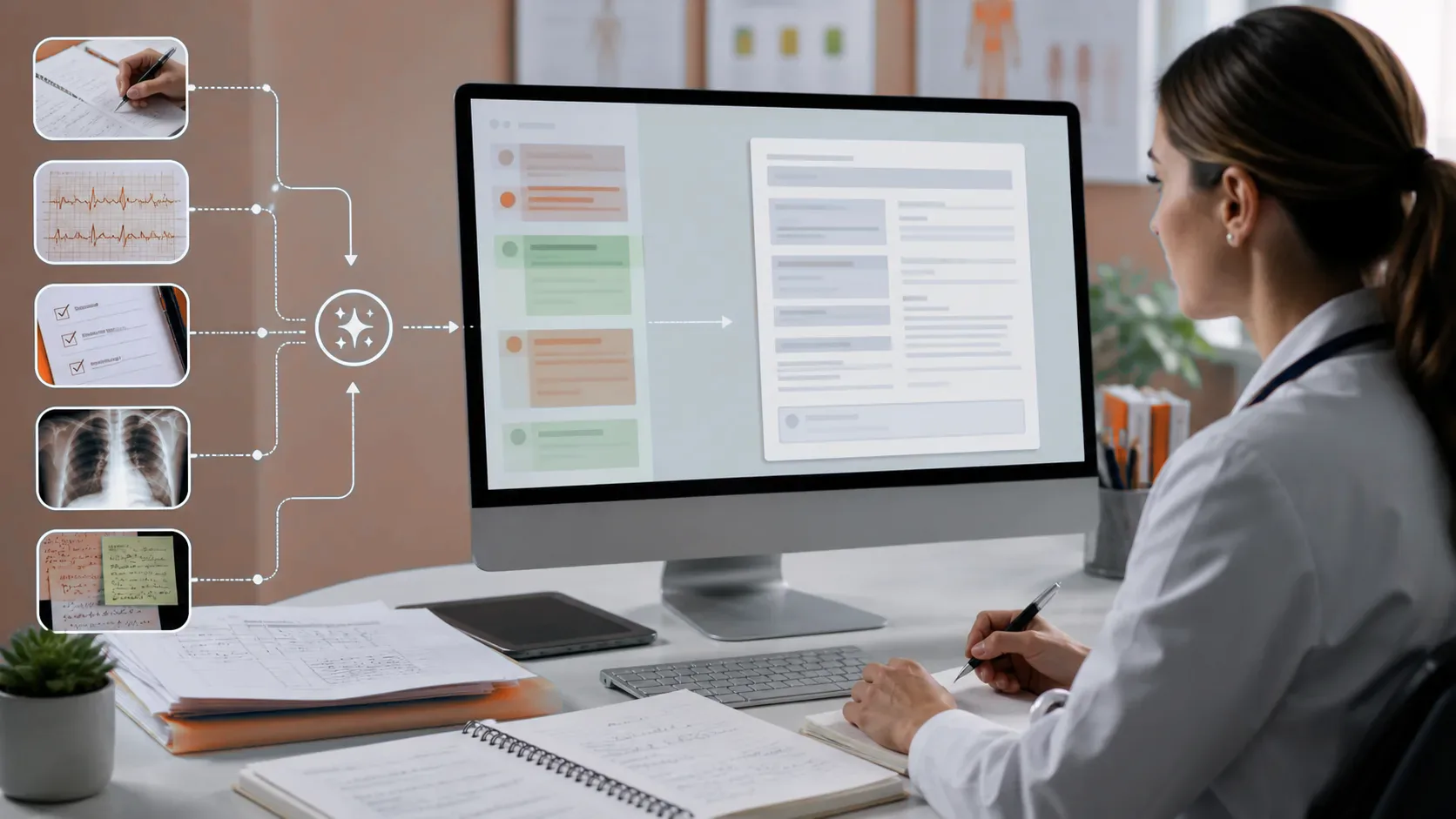
We built report generation as one bounded component inside the wider health platform. The workflow used the information already captured in the patient and clinician experience, then prepared a structured draft for professional review.
The component was deliberately narrow. It did not become an open-ended assistant that could invent a new clinical conclusion while writing. Its job was to turn available information into a report shape that the clinician could inspect, correct and sign.
That made the time saving useful in practice. The professional did not have to start with a blank document, search through several working screens or remember the full sequence of the session before writing. The draft carried the structure forward. The human carried the responsibility for the content.
The workflow was delivered inside a platform that also had to meet healthcare security, privacy and clinical safety expectations. The report component therefore sat inside the same governed service as the patient app and clinician portal, rather than being a separate tool that created another data handoff.
Why it was difficult
Reducing a two-hour report to fifteen minutes is not a formatting exercise. A useful draft needs enough context to save time, but it cannot be allowed to sound more certain than the information supports. The system has to make missing or ambiguous information visible instead of filling the gap with a plausible sentence.
Attribution also matters. The measured result belongs to the report-generation workflow for more than fifty clinicians. It should not be presented as if every part of the health platform became fifteen minutes faster, or as if the system replaced the clinician's review.
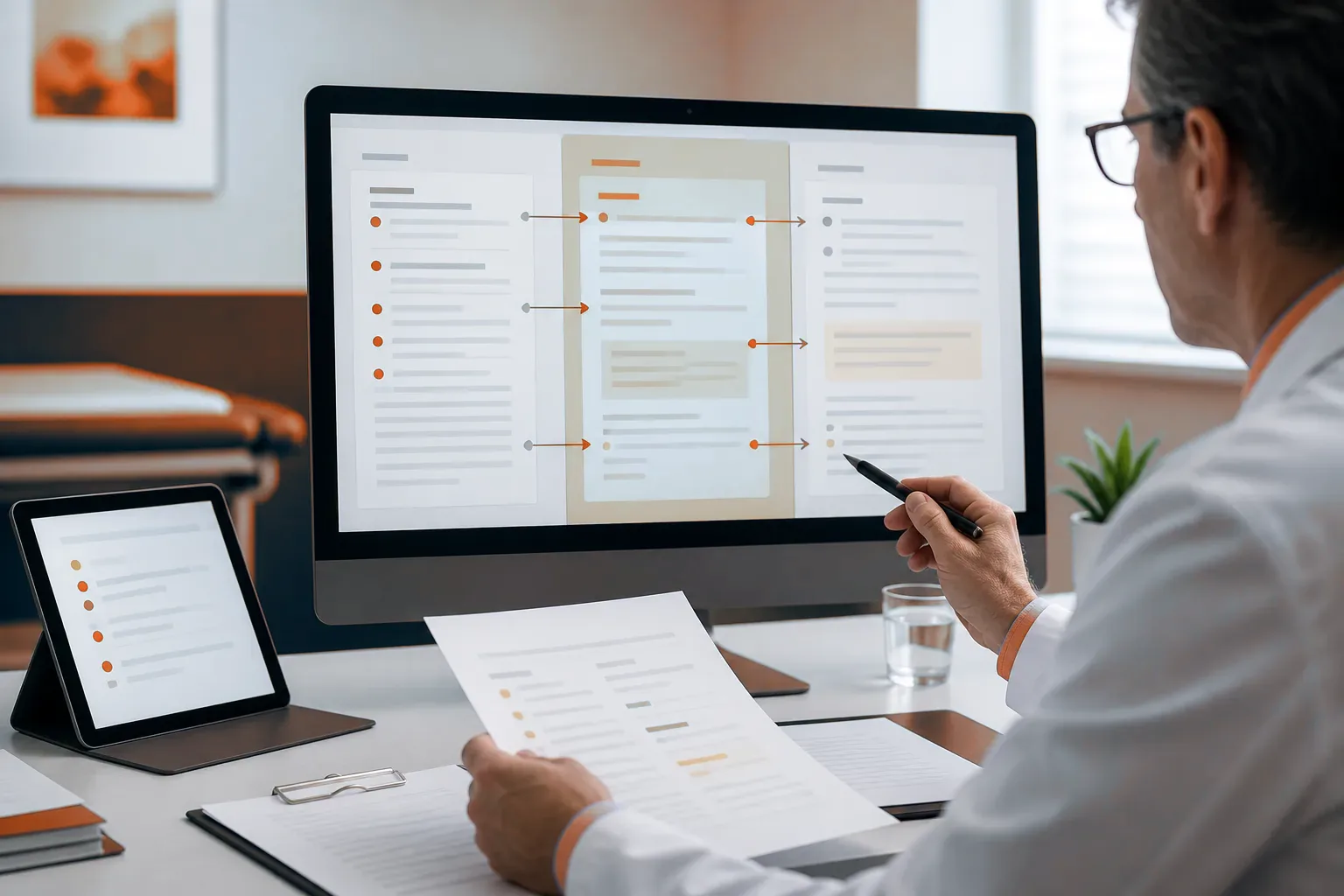
The right design is therefore a handoff. The system handles the repeatable preparation. The professional handles the clinical judgement, edits the draft and signs the document. That division is what makes speed compatible with a consequential record.
Value delivered
- A clinical write-up moved from about two hours to about fifteen minutes for more than fifty clinicians.
- Clinicians received a structured starting point instead of a blank document and a memory-based reconstruction.
- The report workflow stayed inside the patient and clinician platform, reducing an extra data handoff.
- Professional review and sign-off remained explicit parts of the process.
- The time returned to clinicians could be used for patient work, follow-up or other decisions that require professional judgement.
The commercial value is the capacity released from a repeated skilled task. The platform did not claim that clinical work takes fifteen minutes. It reduced the documentation step that followed it.
What this means for your business
The same pattern applies wherever an expert spends hours turning known information into a formal record: an adviser writes a client report, a broker documents a recommendation, a surveyor prepares a site report or a compliance officer records a review.
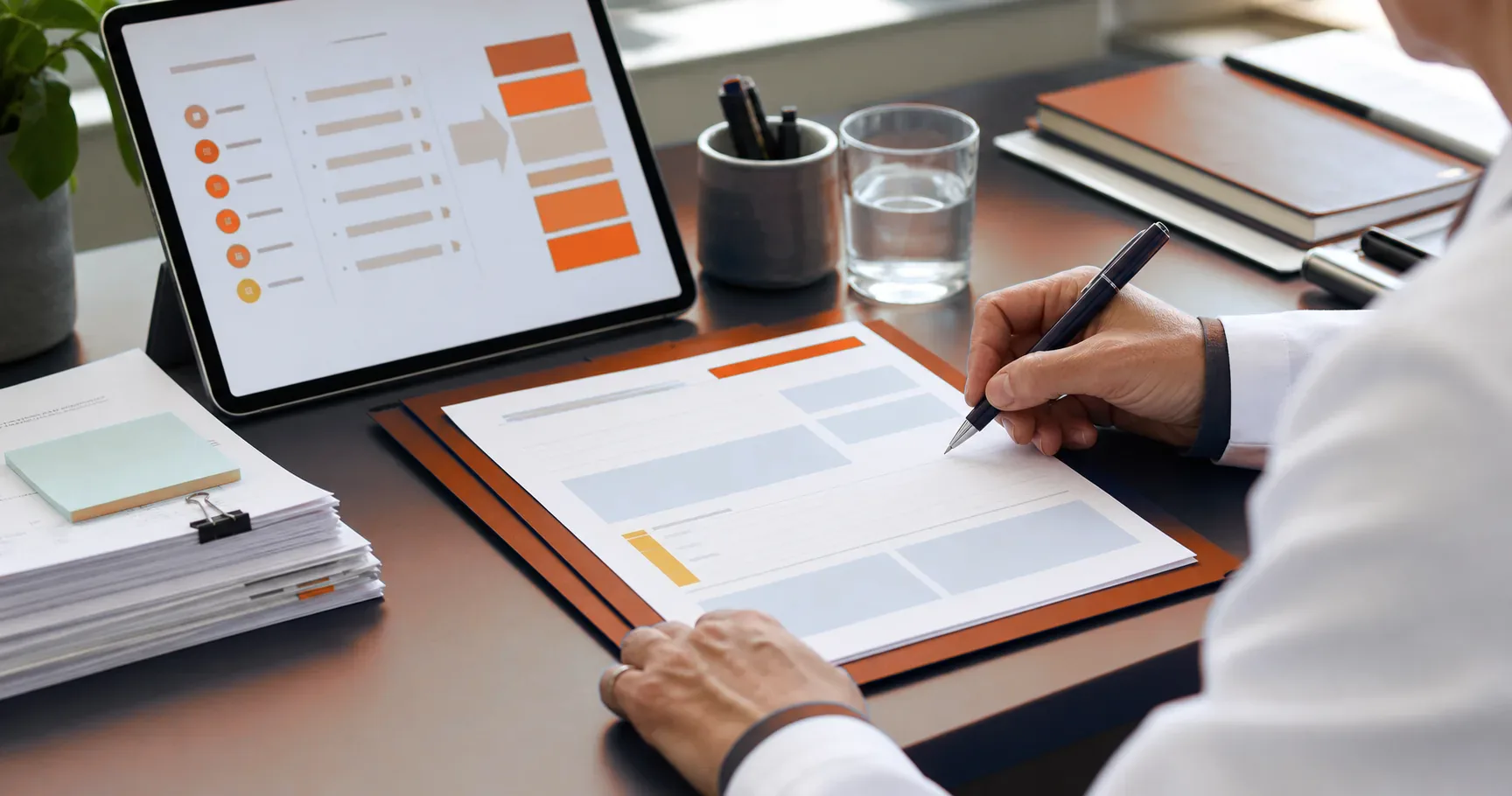
Start with the part that is repeatable. Give the professional a reviewable draft built from the information already in the workflow. Keep the final judgement and sign-off visible. That is how an automation project returns skilled time without hiding responsibility inside a generated paragraph.
Related: Clinical workflow automation · Platform engineering · Digital health and NHS suppliers