 Kuulo
KuuloA closed patient-record boundary becomes a competitive edge
A language-services provider kept its existing platform while gaining the patient-record connection hospitals required.
Value delivered
The provider gained a route into healthcare through a patient-record connection piloted across five hospital systems.
The provider did not need to replace its interpretation platform. It needed to cross the boundary into the hospital record.
Before the integration, the provider's service could run an interpretation session but could not put the session note where the hospital care team expected to find it. That gap blocked the provider from the healthcare market it wanted to serve.
We connected the existing interpretation workflow to the patient record and added patient-language retrieval for interpreter matching. The result was a competitive edge built around workflow fit: the provider could keep its service, while hospital teams could receive the information inside the record they already trusted.
Client background
Our client is a language-services provider with an established interpretation platform and professional human interpreters. It wanted to support hospital providers without turning the project into a replacement of its core system.
The hospital environment imposed the important constraint. Patient records are tightly controlled, and each hospital has its own operational and technical boundaries. A service that cannot connect to that environment may be good at its central job and still be commercially unusable to the buyer.

Business challenge
The client was blocked by a boundary between two working systems. The interpretation service managed the session. The hospital record managed the clinical encounter. Neither side was broken, but the useful information could not travel between them.
That affected more than documentation. The patient's recorded language was also separated from the interpreter-matching workflow. Hospital customers had to maintain the connection manually, or the provider had to ask staff to repeat work that the record already contained.
The integration needed to create market access without asking either side to abandon its existing investment. It had to support the interpretation note, language matching and a multi-site pilot, while remaining precise about what the connection did and did not certify.
Implementation
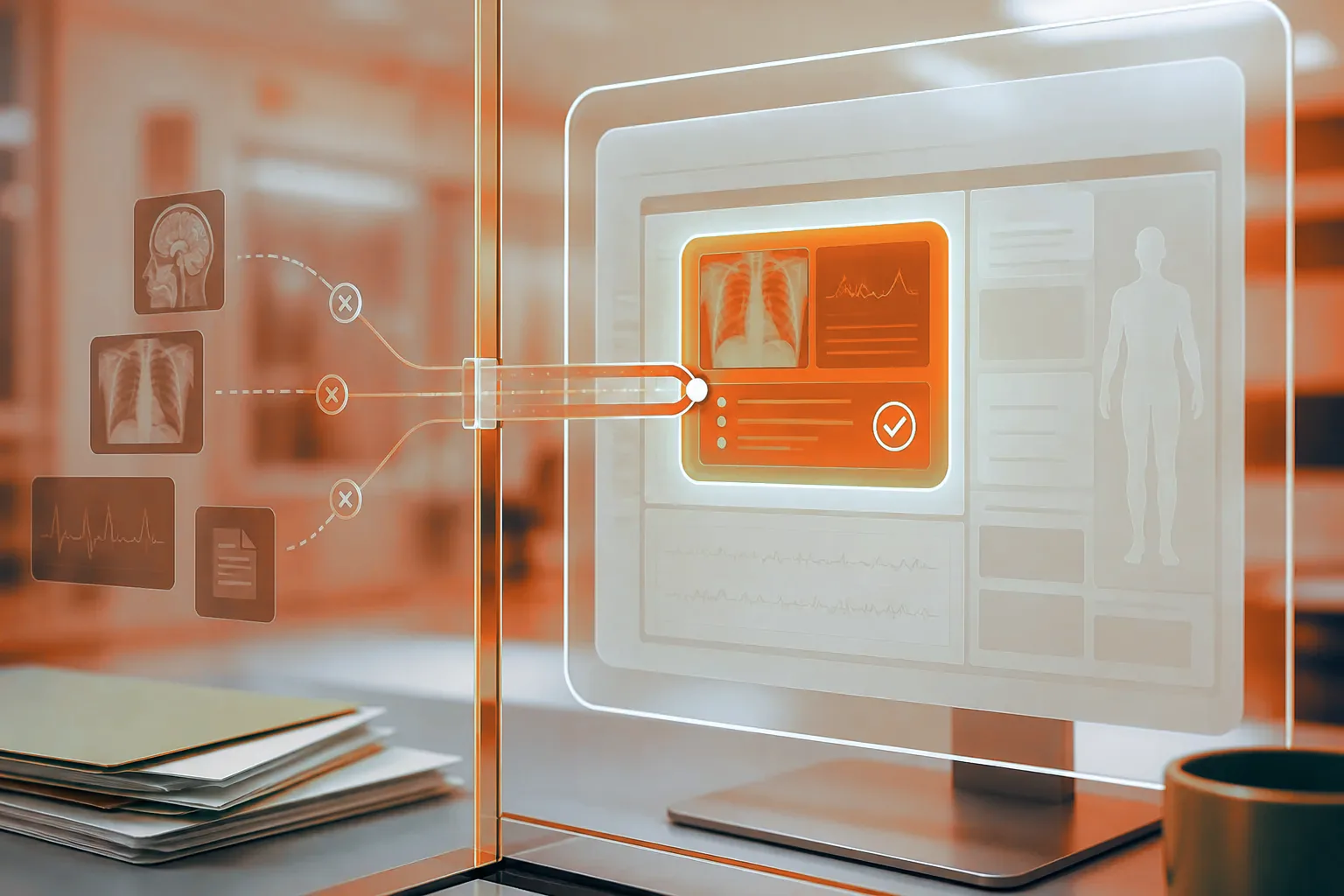
We used FHIR, a standard way for healthcare systems to exchange structured records, to connect the existing interpretation platform with hospital patient records. Session notes can be written into the patient's chart, and patient language can be retrieved to support interpreter assignment.
The workflow was piloted across five hospital systems. The first reviewable milestone arrived inside six weeks, giving the provider and hospital teams an early way to inspect the connection before the full pilot was complete.
The design kept the source and responsibility clear. The integration carries information into the record and makes context available to the matching workflow. It does not decide the patient's care, approve the interpretation note or replace the hospital's clinical judgement.
Most importantly, the client's existing interpretation operation remained in place. The project added a bridge into the healthcare workflow instead of making the provider choose between its own service and the record system its customers required.

Why it was difficult
Closed systems are difficult because their boundaries are part of their safety model. Identity, permissions, data format, auditability and site-specific review all matter. A shortcut that makes a demo work can create a different risk when the workflow reaches a live patient record.
The commercial goal also made replacement the wrong answer. The provider's advantage was its interpretation service and human workforce. The missing capability was the connection that made that service fit the hospital environment.
That is why the integration is described as a competitive edge rather than an API project. The technical work changed what the provider could offer to a hospital customer.
Value delivered
- A provider that was blocked from healthcare gained a credible route into the market.
- Interpretation session notes can enter the patient's record.
- Patient language can be retrieved to support interpreter matching.
- The provider kept its existing interpretation platform and operating workflow.
- The first reviewable milestone arrived inside six weeks.
- The connection was piloted across five hospital systems.
The result is a stronger service proposition. The provider can say not only that it delivers an interpretation session, but that the session fits the hospital's record and access workflow.
What this means for your business
Many businesses are blocked by a system they cannot replace: a policy core, a legal matter platform, a lending engine or an ERP. The commercial opportunity may sit at the boundary.
Identify the output that must cross it. Preserve the source, connect the right context and make the human responsibility visible. A difficult integration becomes valuable when it lets the buyer keep what works and finally use the result where the next decision happens.
Related: Systems integration · Platform engineering · Healthcare language services