 Kuulo
KuuloA language-services provider gains a route into healthcare through the patient record
A patient-record integration turned a blocked healthcare entry point into a service edge for a language-services provider.
Value delivered
Interpretation notes can reach the patient's record, while recorded patient language can support interpreter matching.
The provider already knew how to deliver interpretation. It could not get the result into the healthcare workflow.
Its interpretation platform handled the session, but hospital providers needed the session note in the patient's own record. Without that connection, the service sat outside the system where care teams worked. The provider was effectively blocked from a part of the market it wanted to serve.
We built the path from the interpretation workflow into the hospital patient record. Interpretation notes could reach the chart, and the patient's recorded language could be retrieved to help match the right interpreter. The integration became more than a technical connection. It gave the provider a credible route into healthcare and a service edge that was useful to hospital teams.
Client background
Our client is a language-services provider whose professional interpreters support healthcare interactions. The company already had its own interpretation workflow. The problem was not how to run a session. It was how to make the session part of the clinical record without forcing the provider to replace the platform it already operated.
That distinction matters to a buyer. A hospital does not want a second version of the encounter, and a language-services provider does not want to rebuild its operating model for every hospital. Both need a safe, structured connection between the service and the record.
Business challenge
An interpreted session creates information that the care team may need later. If the session note stays in a separate interpretation system, the hospital has to search for it, request it or rely on a manual handoff. The record that should explain the encounter is incomplete.
The missing connection also limited the provider commercially. Hospital customers needed the service to fit their existing patient-record workflow. Without that fit, the provider could not offer the kind of integrated service the healthcare market expected, even though it already had interpreters and a working session platform.
The new workflow had to solve two related problems:
- put the interpretation note where the hospital care team already looks;
- use patient language information to support interpreter matching before the session.
It also had to work across multiple hospital environments rather than succeed only against a single demonstration account.
Implementation
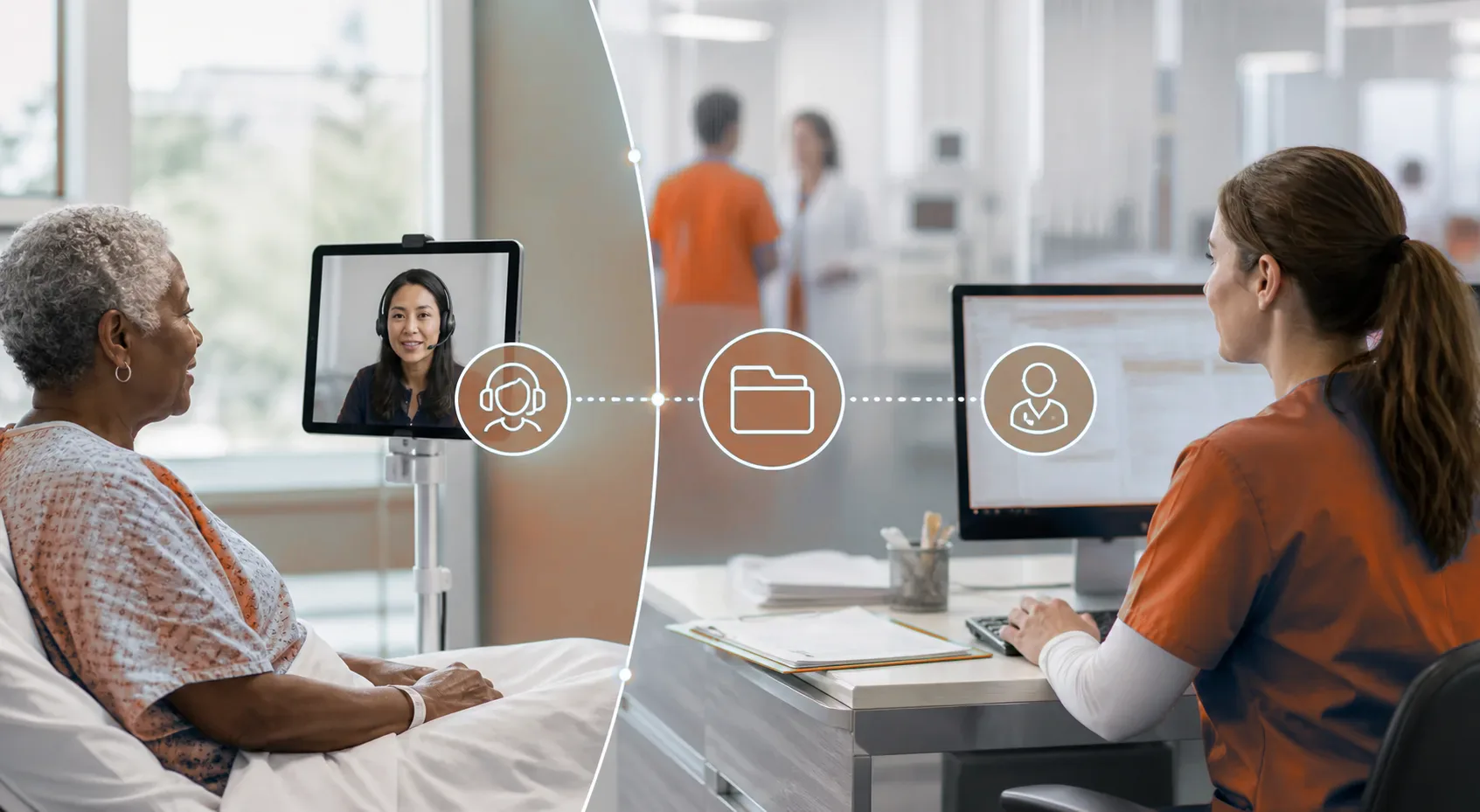
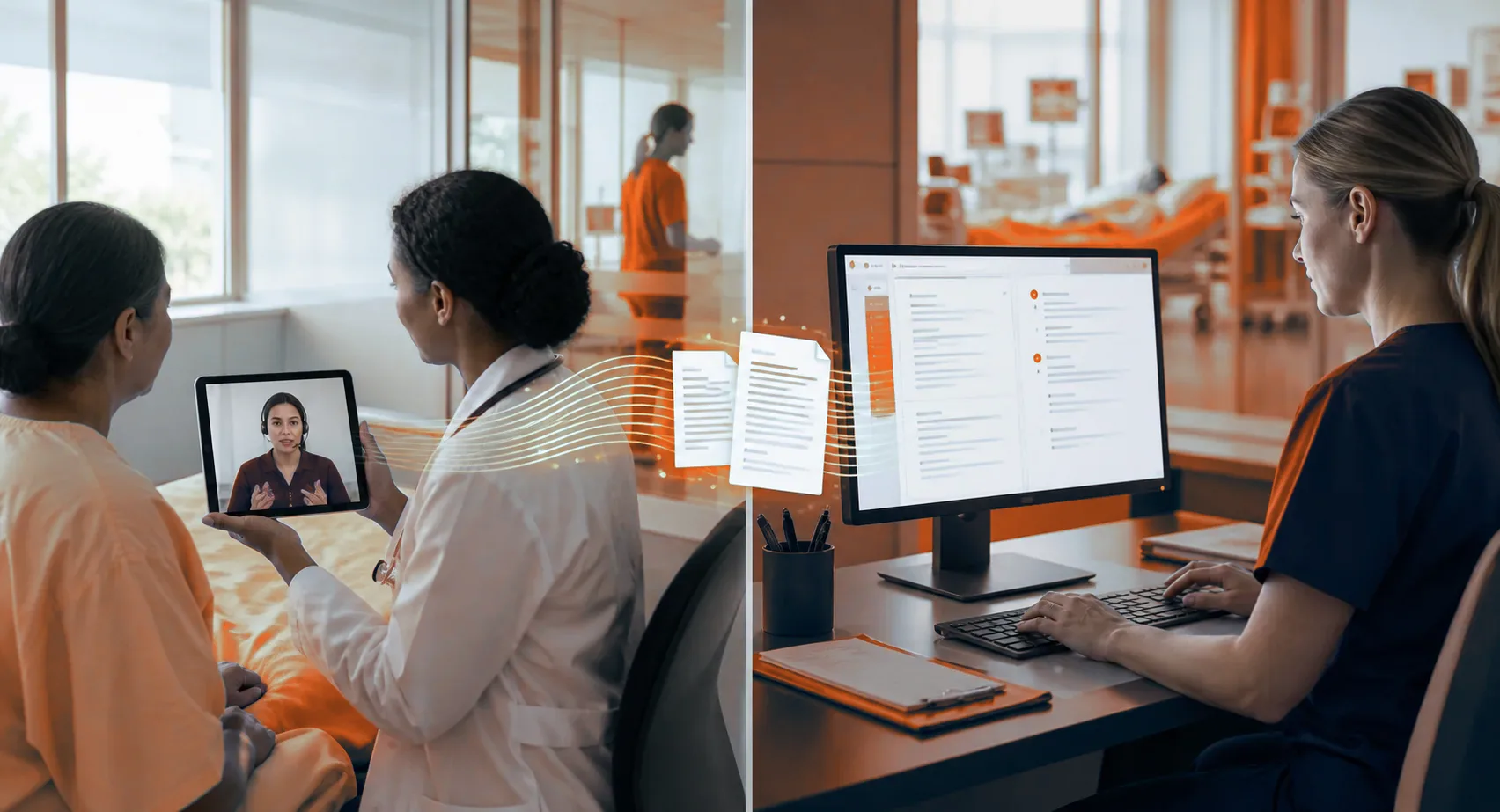
We connected the client's existing interpretation platform to the hospital patient record using FHIR, the standard way many healthcare systems exchange structured records. The integration carries the interpretation session note into the patient's chart so the care team can find it alongside the rest of the encounter.
The integration also retrieves the patient's recorded language for the matching workflow. Instead of asking an administrator or coordinator to check the language separately and then search for an interpreter, the relevant information can enter the assignment process as part of the same service.
The client's interpretation workflow remained in place. We added the missing route into healthcare rather than replacing the platform that already managed the session. That preserved the provider's operating model while making the output useful to hospital teams.
The work was piloted across five hospital systems. The first reviewable milestone arrived inside six weeks, giving the teams a way to assess the connection before the full pilot was complete. A pilot across separate hospital environments has to demonstrate more than a successful API call. It has to show that the information arrives in the right record and remains understandable to the people who need it.
Why it was difficult
Patient records are closed for good reasons. The integration had to respect identity, permissions, data boundaries and the receiving system's rules while still making the interpretation output useful at the point of care.
The commercial constraint made the work harder. A connection that required the language-services provider to abandon its existing platform would have solved one technical problem by creating an operational one. The useful design had to preserve the existing workflow and add a reliable path to the hospital record.
It also had to keep the distinction between a previous interpretation note and a current clinical decision. The integration moves the information into the chart. It does not approve the note, decide the care plan or replace the professional responsible for the encounter.
Value delivered
- A language-services provider gained a credible route into healthcare delivery.
- Interpretation session notes can reach the patient's record used by hospital care teams.
- Patient language can be retrieved to support interpreter matching before the session.
- The existing interpretation platform remains part of the service.
- The first reviewable integration milestone arrived inside six weeks.
- The integration was piloted across five hospital systems.
The business value is market access created by workflow fit. The provider did not need to claim that its core service was new. It made the service usable inside the environment where healthcare customers already worked.

What this means for your business
If a useful service is blocked from a market because it cannot connect to a closed system, the answer may not be a replacement platform. It may be the one structured route that lets your output enter the workflow the buyer already trusts.
The same shape appears in financial services, insurance, legal work and property. The important information is already produced somewhere. The commercial edge comes from making it available in the system of record without forcing either side to abandon the workflow that already works.
Related: Systems integration · Market access · Digital health and NHS suppliers