 Kuulo
KuuloA no-downtime interpretation service protects the call when a patient cannot wait
Connected device, account and call governance supported the strict no-downtime requirement behind a patient-facing interpretation service.
Value delivered
The interpretation service is operated against a strict no-downtime requirement because a failed call can put patient care at risk.
When a patient cannot communicate with a care team, a failed interpretation call is not an ordinary service interruption.
The provider needed to operate a live interpretation service against a strict no-downtime standard. The requirement was driven by the consequence: if the connection fails, the patient may not be able to explain what is happening or understand the care professional's next instruction.
We delivered the operational layer around the existing video workflow. Device management, account control, permissions, device states and call records became part of one governed service. That made the reliability requirement something the operations team could manage and inspect, rather than a sentence in a service description.
Client background
Our client is a US healthcare interpretation provider supporting professional human interpreters, more than fifty languages and hundreds of interpreted calls a day. Its users work across hospital environments, with devices and accounts that must be ready when a care interaction begins.
The provider did not need a new reason to value interpretation. It needed the surrounding system to make the service dependable at the point where the patient and care team meet.

Business challenge
Reliability can be difficult to manage when its causes are fragmented. A call issue may begin with a device in the wrong state, an account that lacks the required permission, an administrative change made locally or a call record that never reaches the people responsible for follow-up.
If those conditions are managed in separate places, the provider sees an interruption but not the operational chain behind it. The team then spends time asking where the failure began while a patient is waiting.
The provider needed a service model that connected:
- the device used for the interaction;
- the account and permissions required to access it;
- the operational state that says whether it is ready;
- and the call record needed to understand what happened afterwards.
The design also had to keep professional interpreters central. The objective was reliable access to human language support, not to remove the person providing it.
Implementation
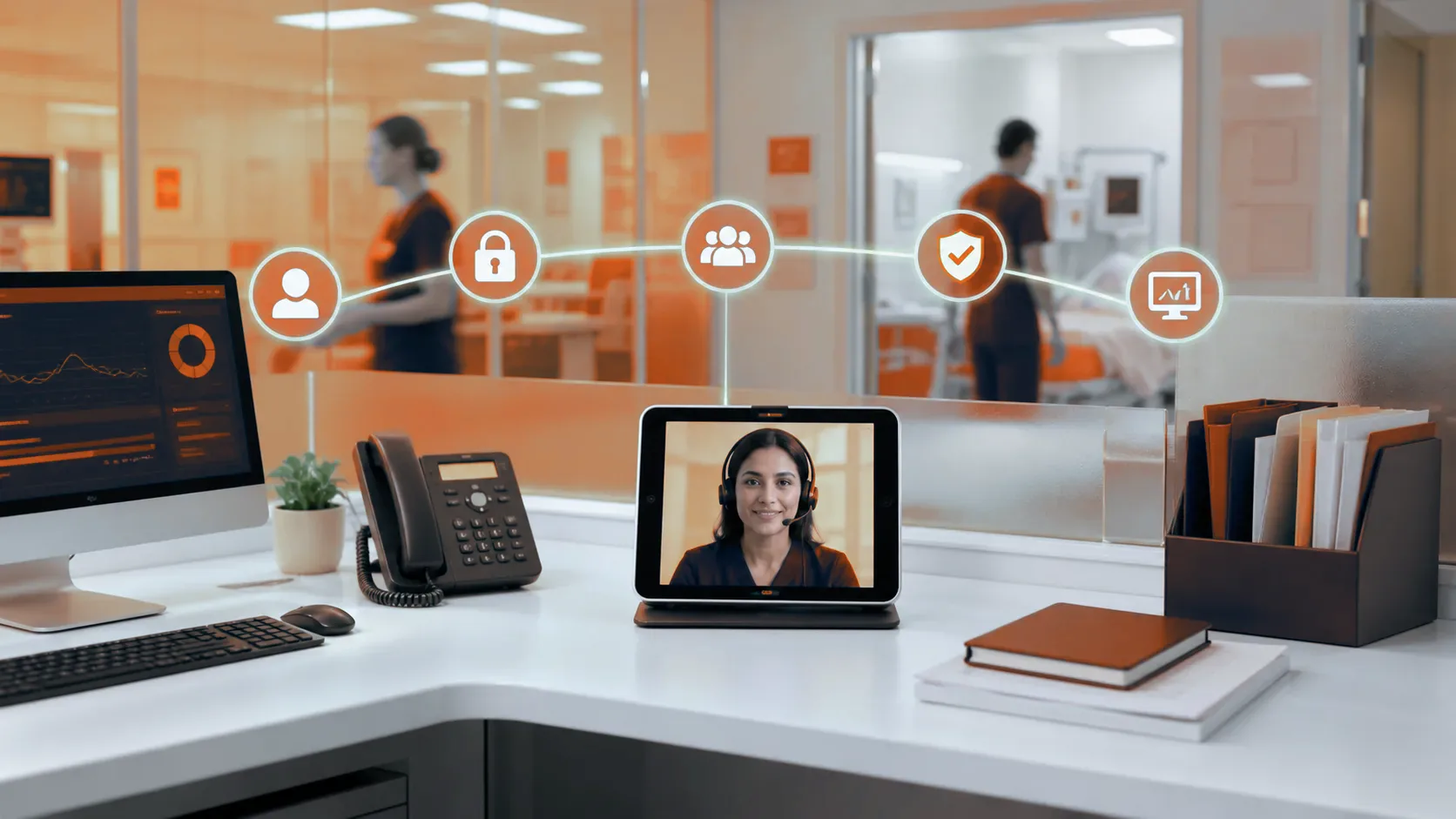
We brought device and account governance into one portal. Administrators can manage permissions, review device state and apply the intended configuration across a distributed operation. That makes the conditions around a call visible to the team responsible for keeping the service available.
We also connected the live call workflow to operational records. The service can retain the context needed to understand the interaction and support the follow-up work around it. An interpretation service is stronger when the call itself, the endpoint that delivered it and the operational record are not treated as unrelated events.
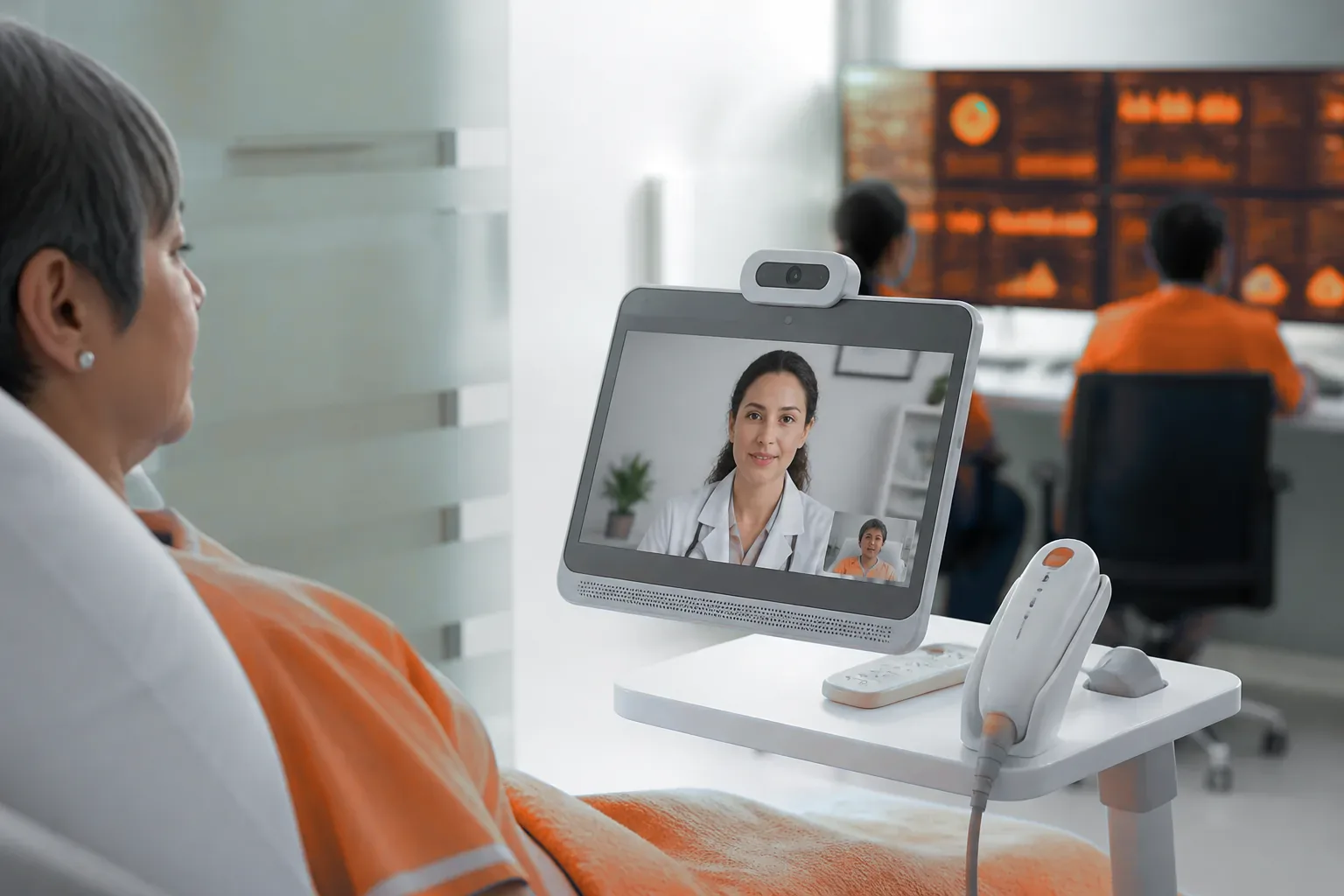
The existing video interpretation workflow remains in place. The delivered system provides the management and control layer around it, supporting more than fifty languages and hundreds of calls a day across hospital environments.
The strict no-downtime standard shaped the operating model. The platform was not described as reliable only because it had a good interface. The people responsible for service delivery were given a shared view of the device and account conditions that affect access to the call.
Why it was difficult
The hardest requirement was human. A normal IT outage can be inconvenient. An interpretation outage can change whether a patient is understood at all. That raises the standard for configuration, permissions, operational handoff and service visibility.
The second challenge was distribution. The provider had to manage variation across hospital environments while keeping the central service coherent. The solution had to expose the right control without turning every local device into an ungoverned exception.
Value delivered
- Interpretation is operated against a strict no-downtime requirement tied to patient safety.
- Administrators have one portal for devices, accounts, permissions and states.
- The service keeps professional human interpreters at the centre of the interaction.
- Call information is available for operational control and follow-up.
- The existing video workflow remains part of the service.
- The operation supports more than fifty languages and hundreds of interpreted calls a day.
- The provider can manage reliability as a connected operating process instead of a collection of local fixes.
The value is confidence at the point of care. Hospital teams can request interpretation knowing that the provider has an operating model built around the consequence of failure, not only the mechanics of starting a call.
What this means for your business
If your service is essential at a particular moment, describe reliability in the language of the person who depends on it. Then connect the devices, permissions, states and records that let your team protect that moment.
This applies to clinical communication, emergency coordination, identity checks, financial approvals and any customer interaction where “try again later” is not an acceptable operating plan.
Related: Digital health · Systems integration · Digital health and NHS suppliers