 Kuulo
KuuloOne admin portal governs interpretation devices across every site
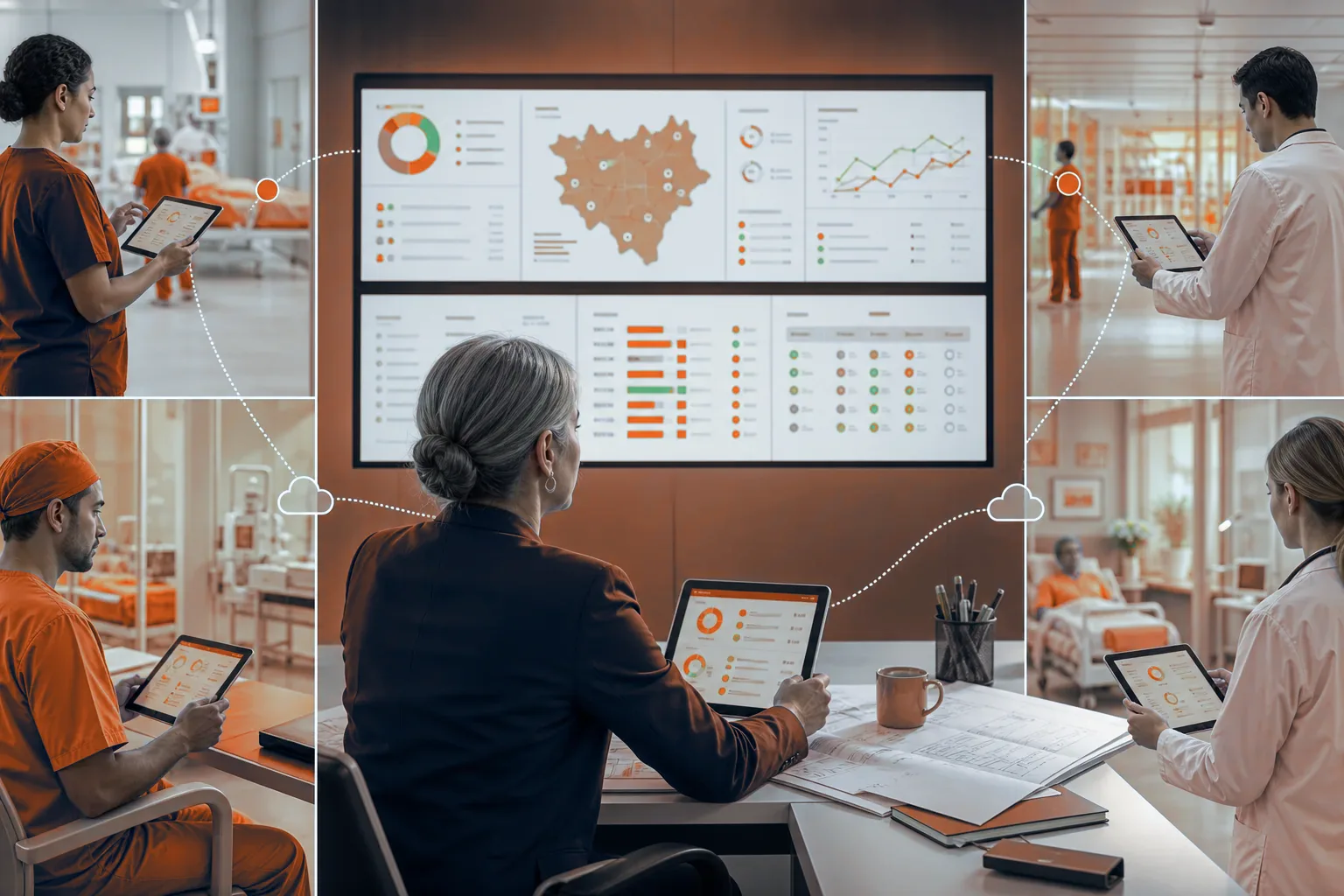
A central administration portal connected devices, accounts, permissions and states around a live healthcare interpretation service.
Value delivered
Administrators can govern interpretation devices, accounts, permissions and states from one operational portal.
Hospital interpretation does not stop being a live service when the call starts. Someone still has to make sure the right account can join, the right device is configured and the right permissions are in place.
The provider's devices and administration were fragmented across hospital sites. That made a simple question expensive: which tablet is in the correct state, which account can use it and who can change the configuration without creating another problem?
We delivered one administration portal for the interpretation operation. Administrators can govern accounts, permissions and device states from a shared view instead of managing each location as a separate exception. The result is a service the operations team can control as one system, even when the people and devices delivering it are distributed.
Client background
Our client is a US healthcare interpretation provider operating across hospital environments and supporting more than fifty languages and hundreds of interpreted calls a day. Professional human interpreters remain central to the service. The engineering problem was the operational layer around those conversations.
The provider already had a video calling workflow. It needed a way to manage the devices and accounts that made that workflow available to hospital staff and interpreters. A portal for one location would not solve the problem. The provider needed consistent control across the operation.
Business challenge
Device administration becomes difficult when every site has its own local reality. A tablet may be assigned to a different department, configured for a different user state or waiting for a change in permissions. If the information is spread across local notes and separate administration screens, the central team has to ask people on site to investigate before it can act.
That creates more than administrative inconvenience. The interpretation call may be needed for a patient who cannot safely continue without language support. A device or account problem can become a care delay while the operations team searches for the cause.
The provider needed one place to answer four practical questions:
- which device belongs to which operational context;
- which account and permissions are active;
- what state each tablet is currently in;
- and what the administrator can change before the next call.
Implementation
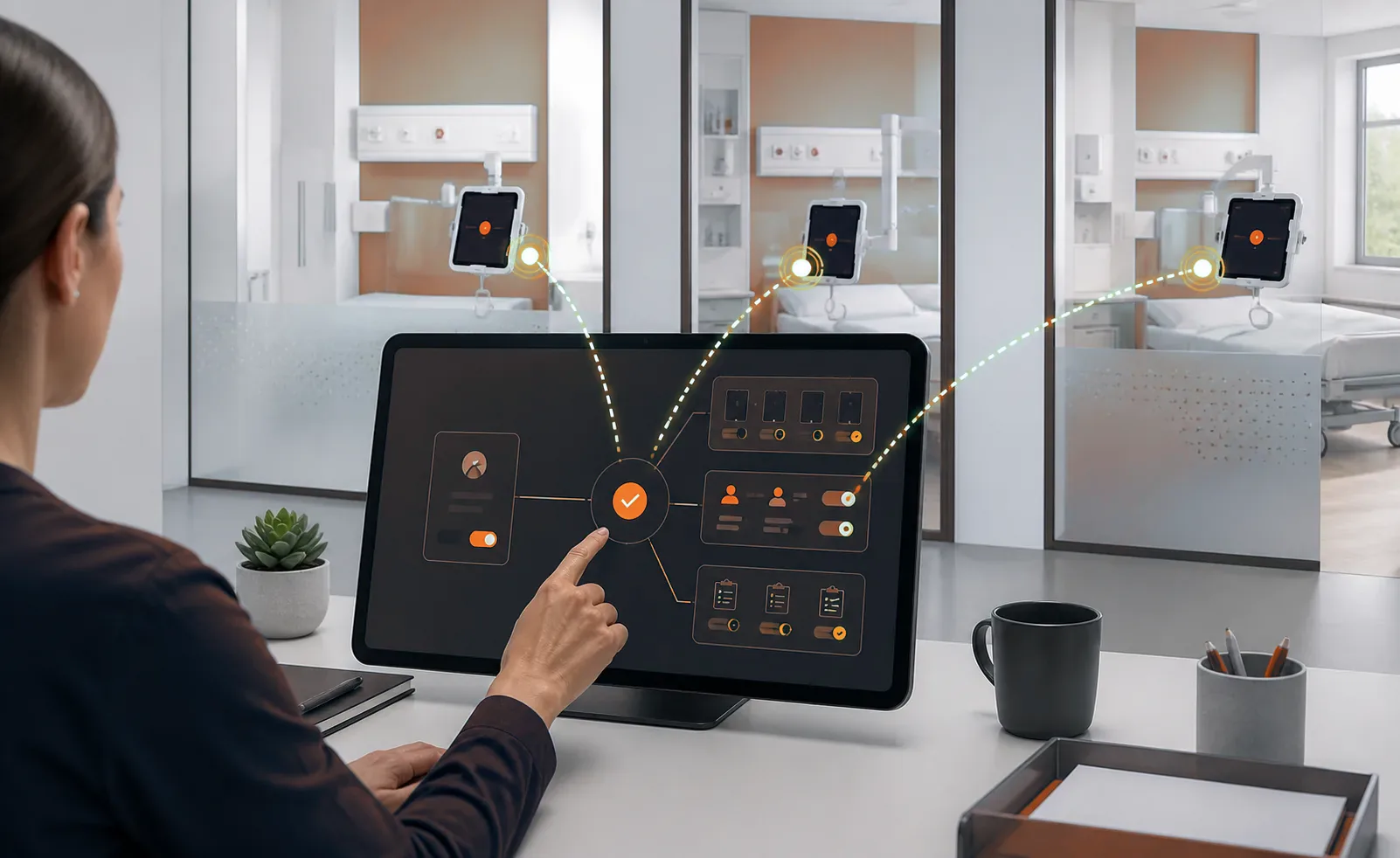
We built a central portal for account and device management around the existing interpretation workflow. Administrators can view the relevant devices, manage permissions and apply the intended configuration without navigating site by site.
The portal treats device state as part of service governance. A tablet is not simply present or absent. Its state affects whether it is ready for a call, assigned to the right context or awaiting an administrative change. Making that state visible gives the operations team a shared language for support and control.
The same portal also brings the account model into the operational view. Access is connected to the people and device context that require it, so an administrator can manage the service rather than only maintain a list of hardware.
The interpretation service continues to use the existing video workflow. The delivered value is the layer around it: a way to govern the devices and permissions that keep a multi-site service usable. The platform supports professional interpretation across more than fifty languages and hundreds of calls a day.
Why it was difficult
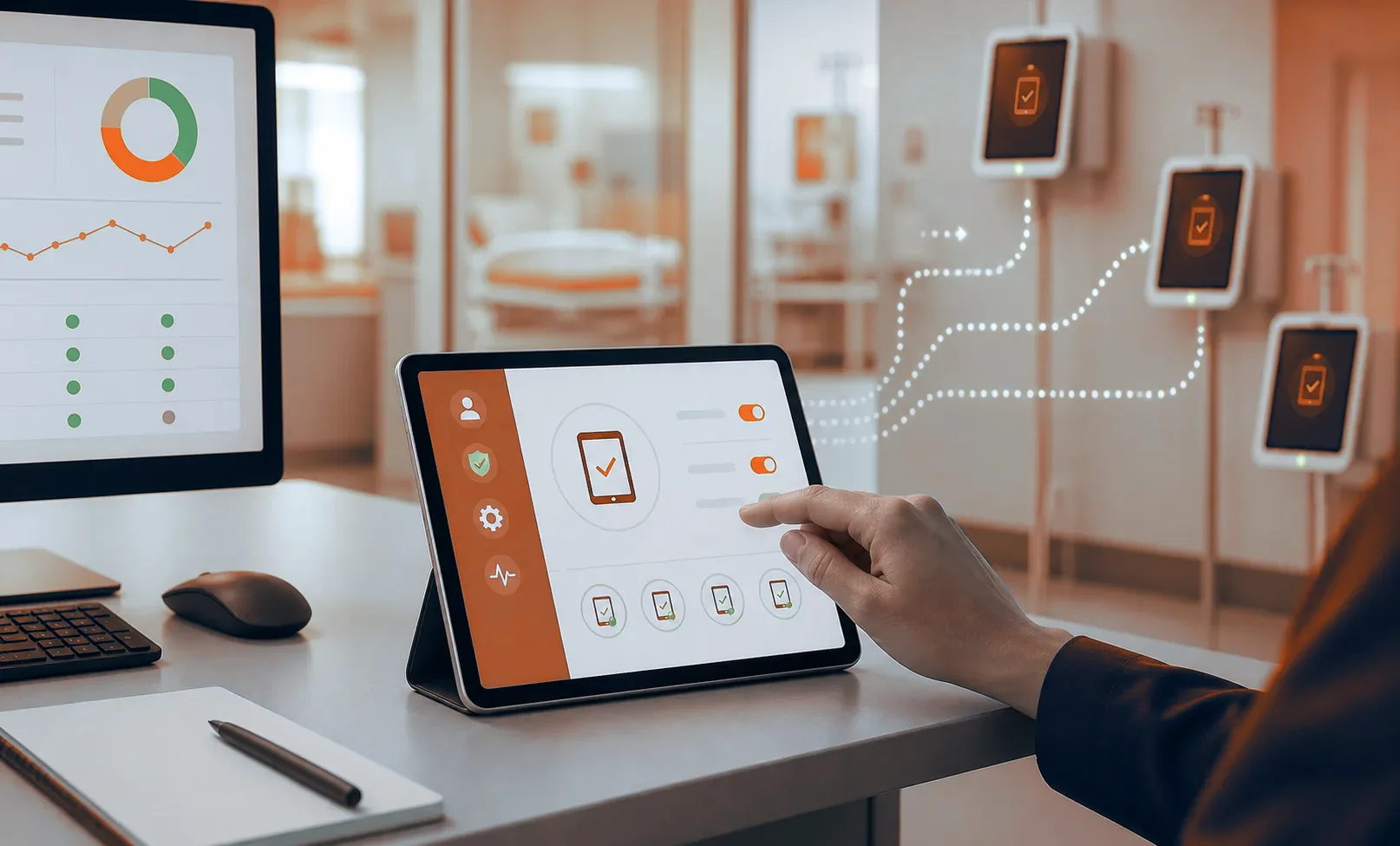
Distributed device management is a consistency problem. A setting that is correct for one tablet or site can be wrong for another. The portal therefore needed to expose enough detail for a responsible administrator to act without turning every local variation into a manual support ticket.
It also needed to be safe around a live healthcare service. The person managing a device is not only maintaining equipment. They are protecting access to a conversation that may be necessary for a patient's care. The operating model had to keep configuration, permissions and device state clear enough to support the strict no-downtime requirement.
Value delivered
- Administrators govern interpretation devices through one portal.
- Account, permission and device-state information is available in the same operational view.
- Distributed tablet configurations can be managed without treating every site as a separate system.
- Support teams can see the device context behind a service issue before asking local staff to reconstruct it.
- The existing interpretation workflow remains in place.
- The service continues to support more than fifty languages and hundreds of interpreted calls a day.
- The platform is operated against a strict no-downtime requirement because a failed call can put a patient's care at risk.
The improvement is governance. The provider's administration team can manage the service as one operation, while the devices remain in the places where patients and interpreters need them.
What this means for your business
If your service works in principle but its devices, accounts and permissions are managed as local exceptions, a new front end is unlikely to fix the operational problem. The missing layer is a shared control plane that shows what exists, who can use it and what state it is in.
That pattern applies to distributed clinics, field-service equipment, property access, branch-based financial operations and any service where a remote administrator has to keep many local endpoints ready for a consequential interaction.
Related: Systems integration · Platform engineering · Digital health and NHS suppliers