 Kuulo
KuuloPatients and clinicians work from one connected service
A connected care workflow turned short patient updates into a pre-visit trend view clinicians could review in seconds instead of reconstructing for at least thirty minutes.
Value delivered
Clinicians can generate a pre-visit summary in one click and review recent trends in seconds instead of spending at least thirty minutes reconstructing the week.
Care planning breaks when the patient and the clinician are working from different versions of the week.
A patient, carer or family member may know what happened at home. A clinician may have a short visit window and a separate portal. If those two sides do not meet in the same service, the professional spends the visit reconstructing what happened instead of using the information to decide what should happen next.
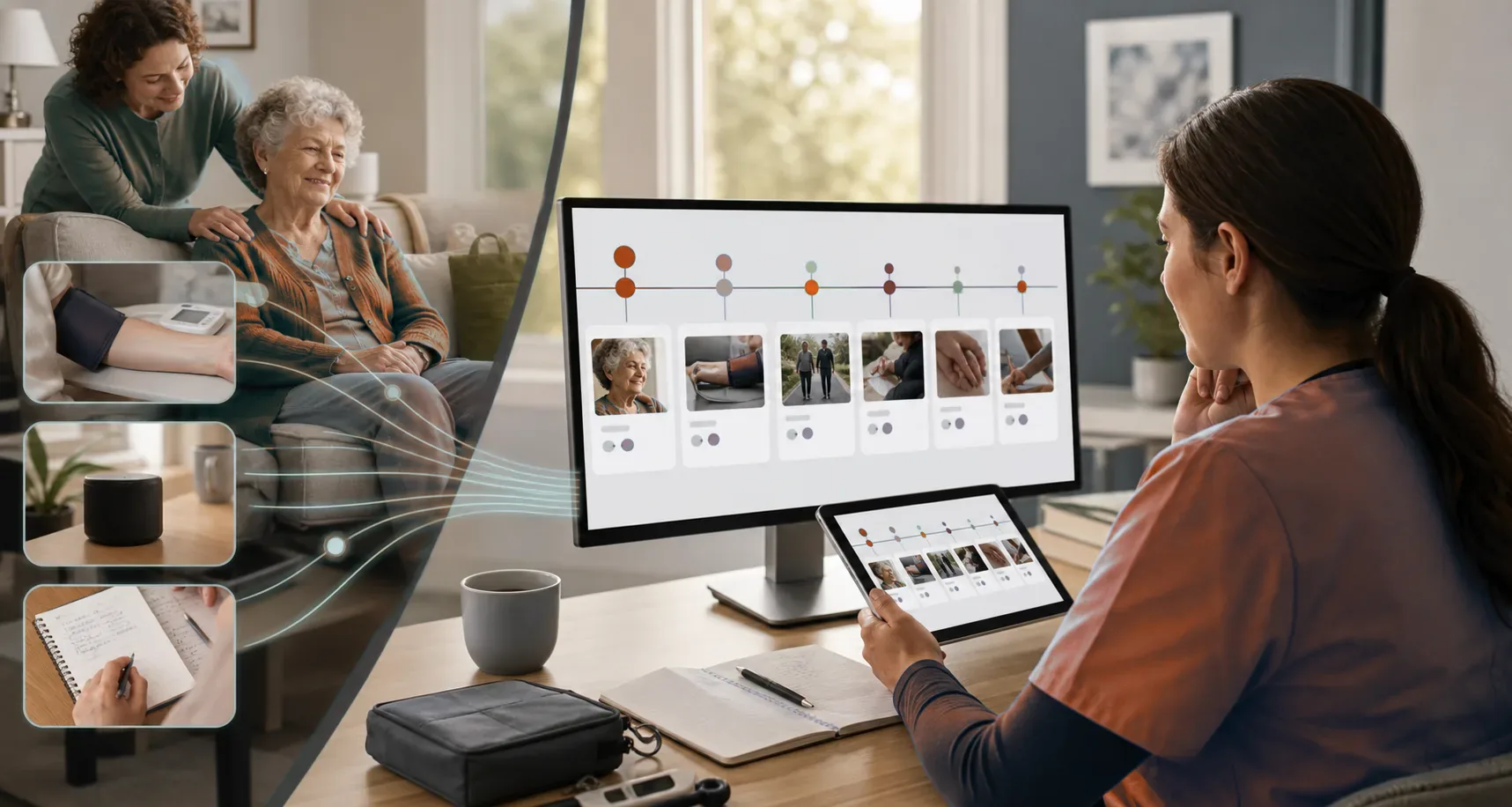
We connected the patient app and clinician portal into one service. Patients could record short, usable updates. Clinicians could see the recent pattern, generate an AI-assisted report and prepare for the visit in seconds instead of spending at least thirty minutes piecing together the previous week.
Client background
Our client is a digital health company whose platform supports patients and clinicians across NHS care systems. It serves an ongoing care workflow, so the value depends on information moving between the people receiving care and the professionals responsible for it.
The platform has to support different types of interaction. Patients and carers need a low-friction way to record what they did or noticed. Clinicians need a reliable view of the information, a way to spot a change and a report they can review before deciding what to do.
Business challenge
Before the connected workflow, care planning and care delivery were fragmented. A clinician could spend at least thirty minutes before a home visit asking:
- What happened since the last visit?
- What did the patient, carer or family member do?
- Has anything changed from the normal pattern?
- Which action was completed, and which one was missed?
- Is the information reliable enough to change the plan?
That preparation time came before the visit itself. It delayed the useful part of the interaction and made the quality of the summary dependent on how much information a person could find and remember.
The same problem affected carers and families. If recording an update required a long form or a carefully written narrative, useful information was more likely to remain in conversation, memory or an unstructured message. The platform needed to make the smallest useful update easy, then make the result visible to the clinician.
Implementation
We built the patient app and clinician portal as a single service rather than two interfaces with a manual handoff between them. Patients, carers and family members could make short in-app entries about what had happened. The product could then show the pattern in a form the clinician could review.
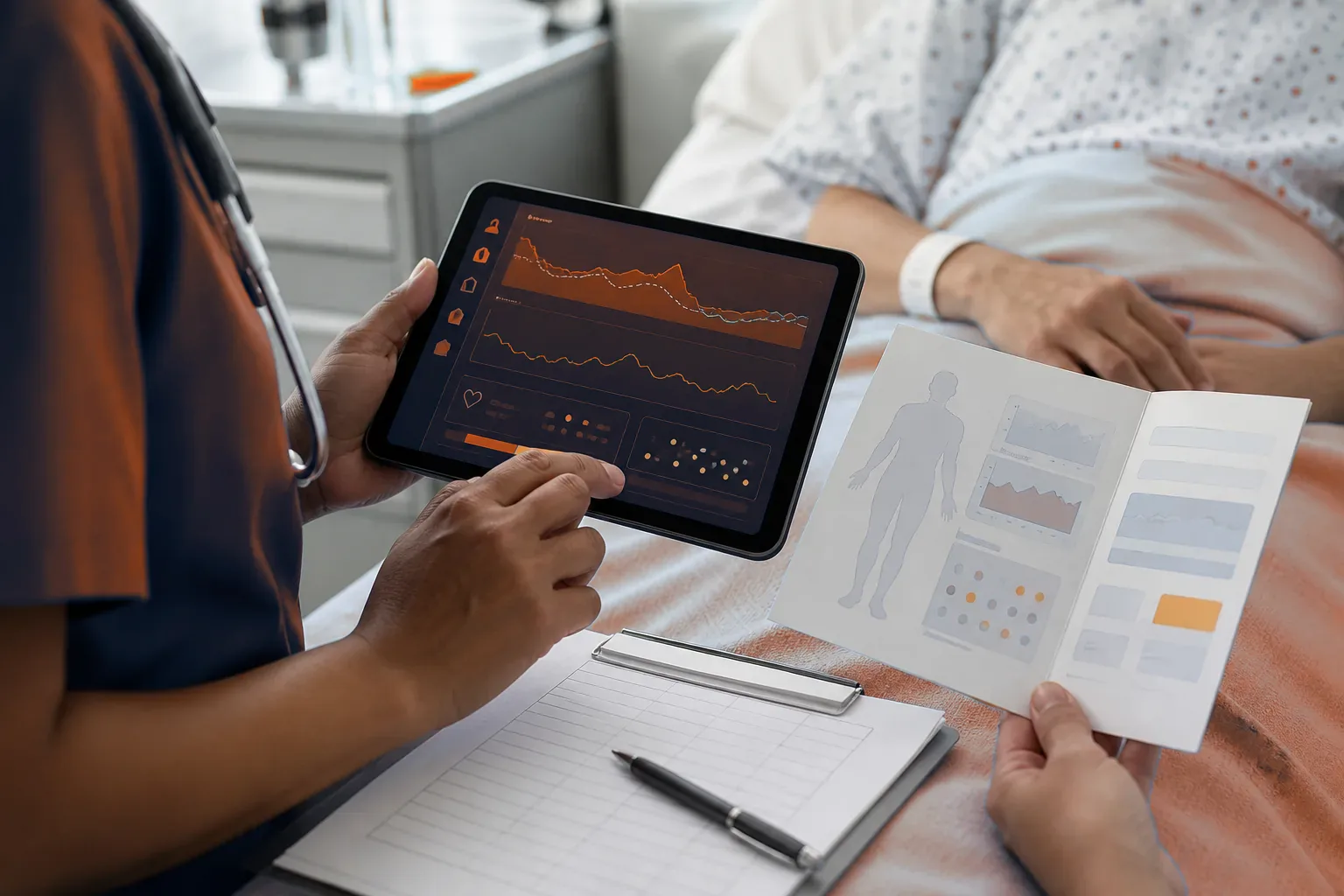
The pre-visit workflow added a one-click AI-assisted report. It gathered the recent updates into a structured summary and surfaced trends and key points before the clinician arrived. The report was a preparation aid, not a clinical decision. The professional remained responsible for reviewing the information and deciding what it meant for the patient.
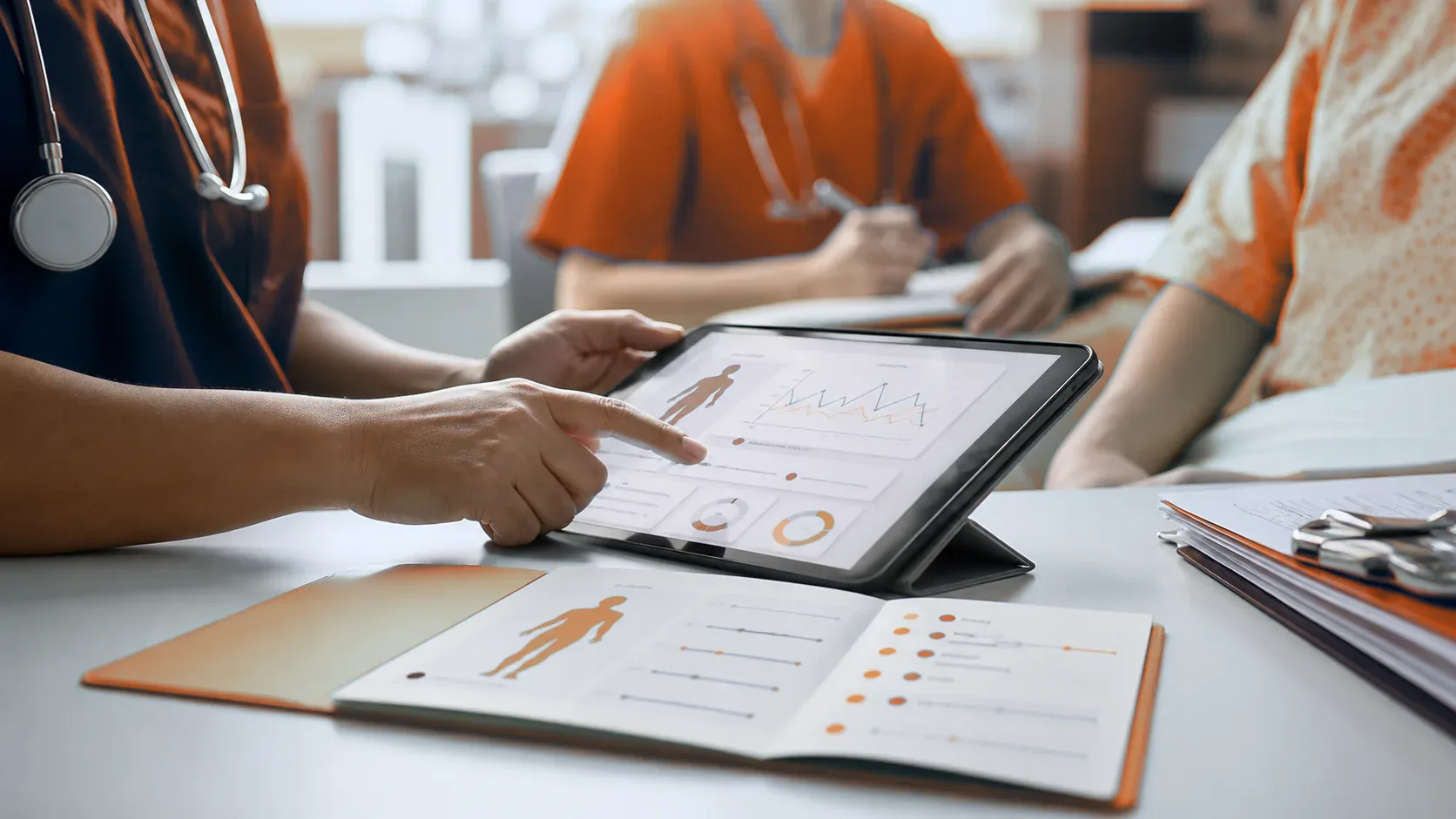
We also adopted the most useful features of a hospital passport as an offline-available in-app record. It gives a doctor or another professional a compact view of the patient's normal and abnormal baseline when communication is difficult or connectivity is limited. The purpose is not to replace the current assessment. It is to give the next professional a better starting point.
The interaction model was kept usable across patient groups, including people with learning disabilities. Short, repeatable actions are easier to complete consistently than a long retrospective account. That matters because the clinician can only see a trend if the information is captured often enough to form one.
Why it was difficult
The hard part was not placing an app on a phone. It was making the information useful at both ends of the workflow without adding another administrative burden.
The patient side had to be simple enough to use during ordinary life. The clinician side had to be structured enough to support professional review. The hospital passport had to be available offline, because the moment when a baseline matters may also be the moment when connectivity is unreliable.
The report workflow also had to be bounded. An AI-generated summary can help a clinician see the shape of the information quickly, but it must not hide uncertainty or turn a missing update into a confident conclusion. The design kept the source updates and the professional review in the same service.
Value delivered
- Patients, carers and family members can record care updates through simple in-app actions.
- Clinicians can generate a pre-visit summary in one click and see trends in seconds instead of spending at least thirty minutes reconstructing the week manually.
- The patient app and clinician portal operate as one connected care workflow.
- An offline hospital passport keeps the patient's normal and abnormal baseline available when it is needed.
- The interaction model remains usable across patient groups, including people with learning disabilities.
- Professional judgement remains explicit: the report supports preparation, while the clinician reviews and decides.
The operational change is straightforward to explain. The clinician spends less time finding the story before the visit and more time using it during the visit. The patient and the care team are no longer maintaining separate versions of what happened.
What this means for your business
Whenever one person records information and another person has to act on it later, the handoff is part of the product. A field engineer, adviser, case worker or account manager should not have to reconstruct the week from scattered messages before the next decision.
Make the first update easy, keep the context attached and give the decision-maker a concise view before the next interaction. That is how a digital workflow becomes a shared operating record rather than another place for people to enter data.
Related: Care planning · Connected platform · Digital health and NHS suppliers