 Kuulo
KuuloA weather delay becomes visible cost before it becomes a revenue leak
Weather and disruption records connected project delays to affected work, dependencies, rental, labour exposure and extra charges.
Value delivered
A disruption can be connected to the work it affected and the equipment, labour and commercial records that followed.
Rain is a site condition. The revenue leak begins when nobody can connect the rain to the work it stopped and the costs that continued.
When weather delays construction, the completion date may move while rented equipment, paid crews and other project costs remain. The disruption can also affect follow-on work and expected charges. If the event is recorded only in a site message, management may see a late project without seeing the cost chain that explains it.
We connected weather and disruption records to the project timeline, affected work, dependencies, equipment rental, labour exposure and extra charges. The result is a visible operational event that can be understood before it becomes an unexplained gap between projected and captured revenue.
Client background
Our client is a large construction company delivering public bridge contracts, housing developments and other multi-site work. Its projects depend on schedules, equipment, labour, local requirements and commercial decisions that interact over time.
Weather is one of the clearest examples of why those records cannot remain separate. A site team experiences the event first. Project controls, finance and commercial teams need to understand its consequences later.
Business challenge
The old question was often simply, “Why is this project late?” That question is too late and too general to protect the business.
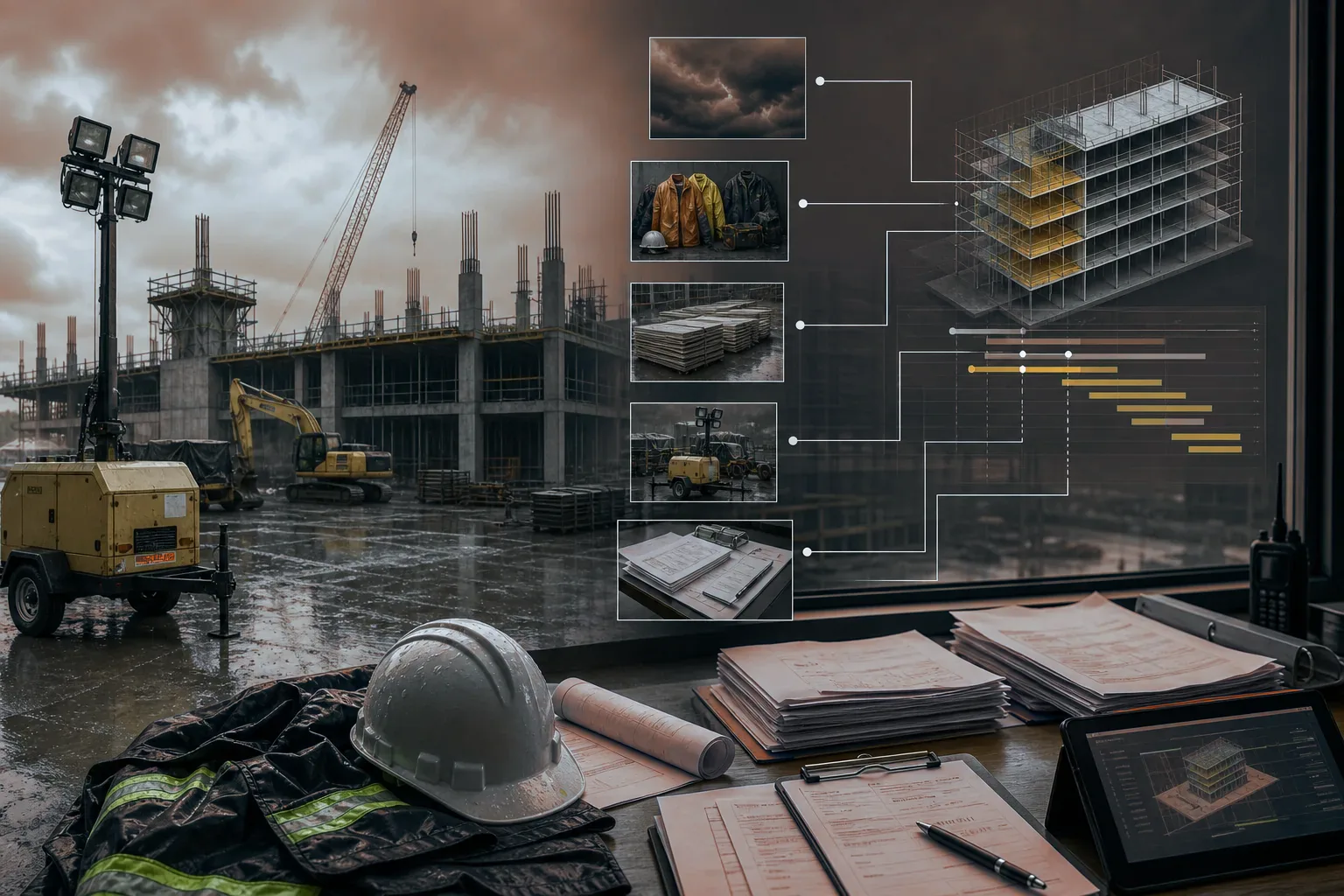
A useful answer needs to show:
- when the weather event occurred;
- which activity or work package it affected;
- which dependency moved as a result;
- how long equipment remained rented;
- what labour cost continued during the disruption;
- and whether an extra charge, change or claim record followed.
Without those connections, a delay becomes a narrative. The project team may know what happened, but leadership cannot see the operational and commercial consequences in one place. The company then absorbs costs that should at least be visible for a contract discussion or internal decision.
Implementation
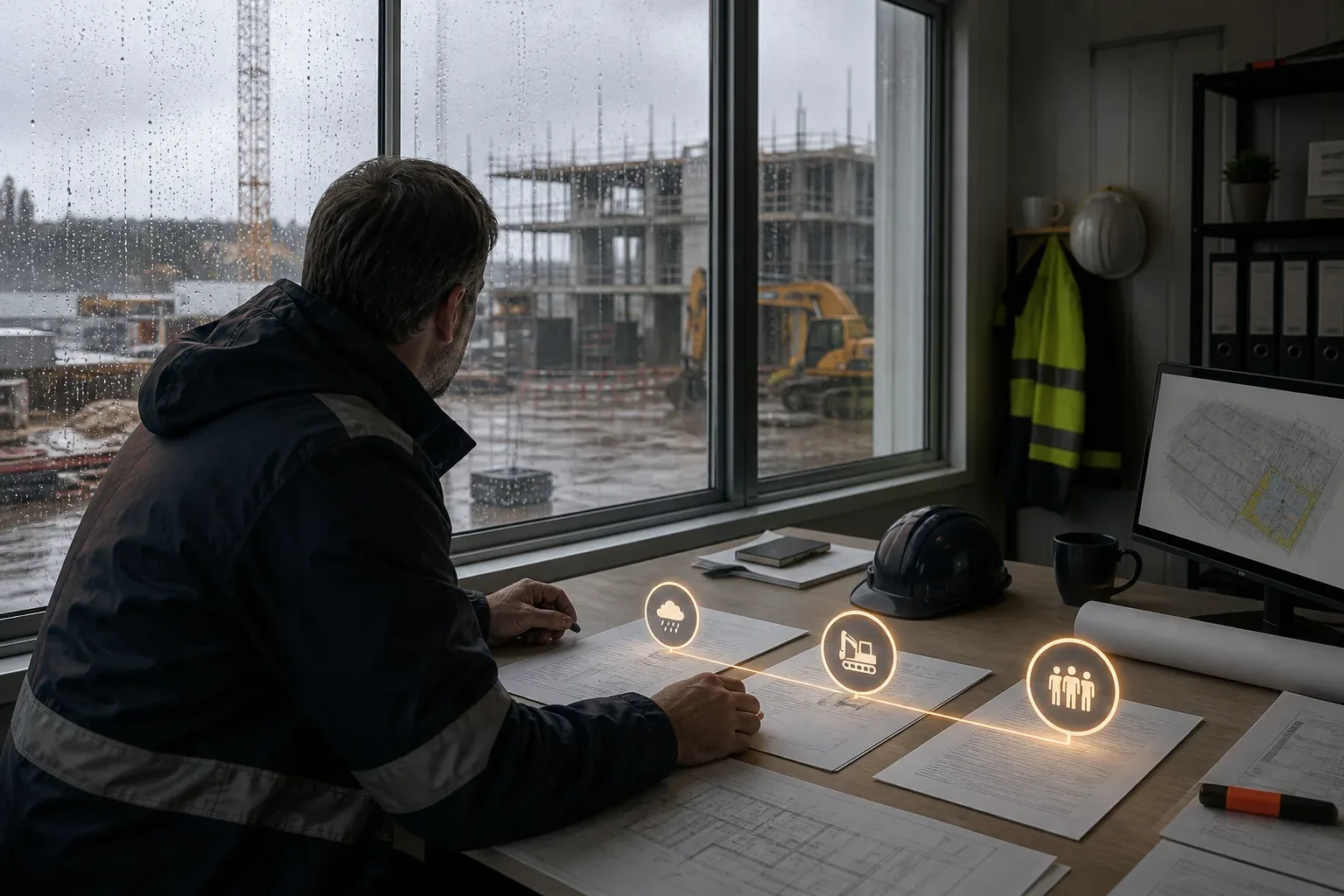
We added weather and disruption events to the project timeline. Each event can be related to affected milestones, work packages and dependencies. The timeline gives the team a sequence rather than a single late-status label.
The system connects the event to the records that create cost exposure. Equipment rental, labour and other project costs can be viewed alongside the period of disruption. Extra charges and changes can be linked to the same operational context, so the team can distinguish the weather event from the commercial decision that followed it.
Project email and source documents remain part of the record. A site update, authority communication or subcontractor message can support the timeline rather than living as an isolated explanation.
The system does not decide who is legally responsible for a delay. It gives the project and commercial teams a factual sequence to review, verify and use when discussing extensions, variations or budget responsibility under the relevant contract.
Why it was difficult
Weather is easy to name and hard to model. Its effect depends on the activity, site, equipment, labour and sequence of work. The same rain event can have different consequences on different projects.
The system therefore had to preserve project context. It could not treat weather as a generic reason code and call the commercial problem solved. The event needed to stay attached to the work and cost records that made its impact real.
Value delivered
- Weather events are visible in the project timeline.
- A disruption can be connected to the work package and dependency it affected.
- Equipment rental and labour exposure can be reviewed alongside the event.
- Extra charges and changes can be linked to the operational sequence.
- Project leaders can see more than a late status; they can inspect the chain of events.
- Commercial teams have a clearer factual basis for contract discussions.
- The company can identify revenue leakage earlier instead of discovering only a final gap.
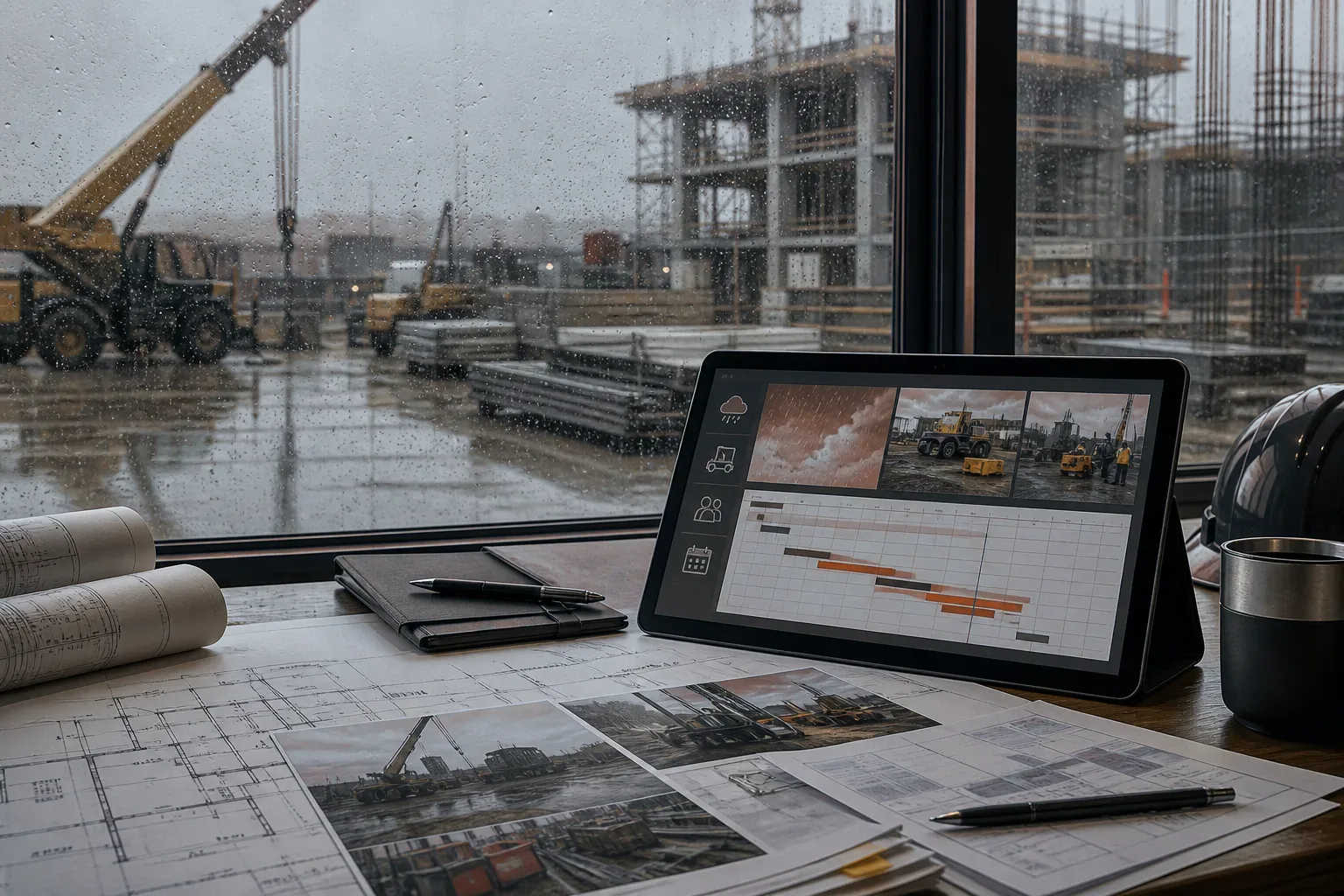
The value is earlier control. A weather delay becomes a traceable operational and commercial event while there is still time to manage its consequences.
What this means for your business
If an external event appears in one system and its financial effect appears in another, the gap between them is where leakage hides. Connect the event to the work, dependency, cost and decision that follow.
The same pattern applies to supply disruption, regulatory change, claims, outages and any event that changes a schedule while costs continue to run.
Related: Workflow automation · Systems integration · Construction companies